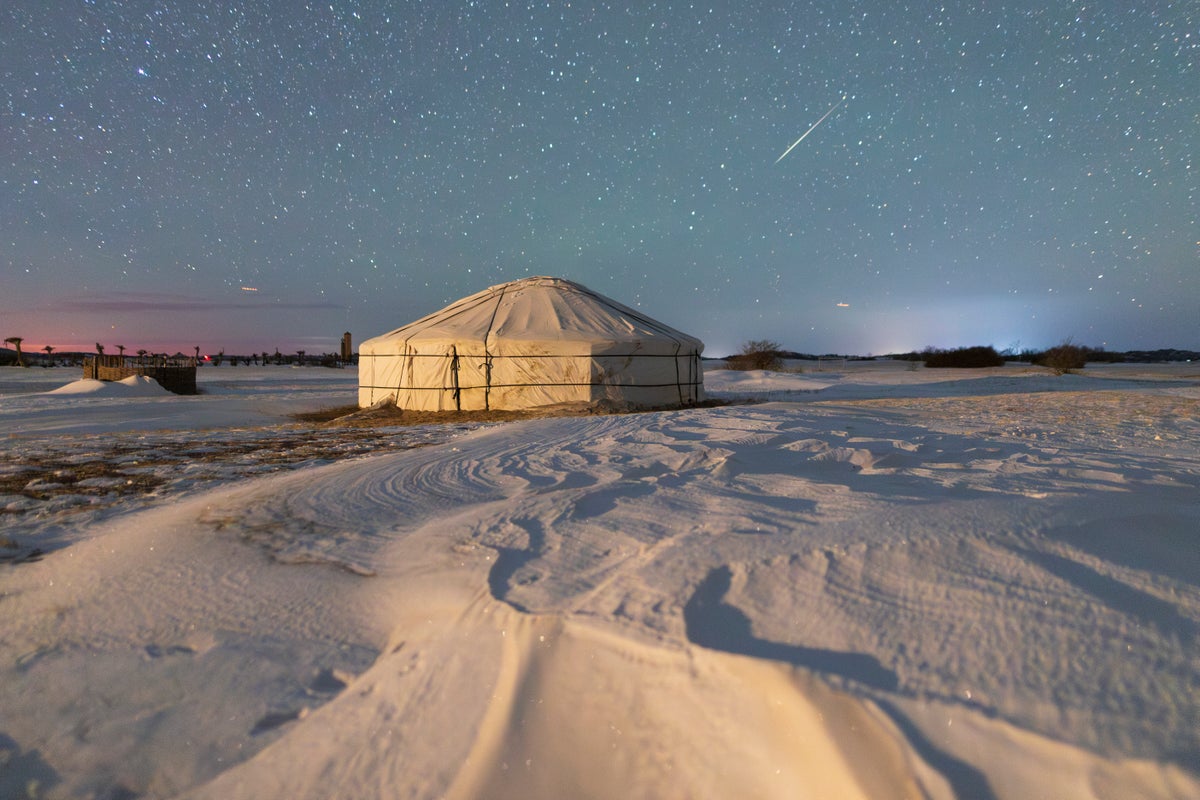
The Quadrantid meteor shower occurs annually from November through early January and peaks the night of January 3 into the early hours of January 4, 2026. The shower is notable for bright fireballs and bolides—large meteors that can explode in the atmosphere and sometimes produce meteorites. Best viewing is from the Northern Hemisphere during predawn on January 4, but a full moon rising the night before may reduce visibility. The radiant lies near the obsolete constellation Quadrans Muralis; observers should instead use Ursa Major (the Big Dipper) and look toward the end of its handle. The Quadrantids originate from asteroid 2003 EH1.
"The first meteor shower of 2026 is known for its bright fireballs and bolideslarge meteors that explode in the atmosphere in dramatic fashion, sometimes raining meteorites onto Earth below. The Quadrantids are an annual shower running from November through early January. This year the Quadrantids will peak on the night of January 3 through the early hours of January 4. Best viewed from the Northern Hemisphere, the ideal time to get outside and try to spot some of these luminous fireballs"
"To have the best chance of spotting a meteor, look for the Quadrantids' radiantthe point of the sky where they appear to originate. First observed in 1825, the meteor shower radiates from an obsolete constellation called Quadrans Muralisnamed by a French astronomer in 1795, it was left out of the International Astronomical Union's list of official constellations in 1922. Instead look for Ursa Major, or the Big Dipper, and gaze toward the end of its handle."
Read at www.scientificamerican.com
Unable to calculate read time
Collection
[
|
...
]