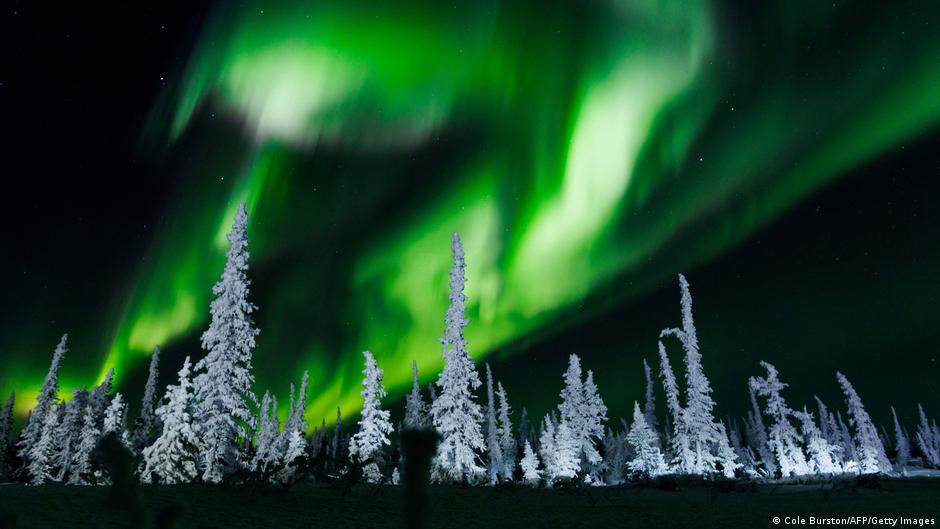
"Recent years have seen a surge of interest in the almost psychedelic vision of the vibrant green and purple lights dancing across the sky. The desire to catch a glimpse of what are officially known as the aurora borealis and aurora australis has given rise to designated tours, watch parties and numerous tracking apps. And while the attraction of the ephemeral display is clear, here are a few things you may not know about the northern and southern lights."
"Huge explosions on the surface of the sun, known as solar storms, regularly eject vast streams of electrically charged particles. Some of this plasma ends up traveling toward Earth, and is pulled toward the planet's magnetic poles. "These particles then slam into atoms and molecules in the Earth's atmosphere and essentially heat them up," explained astronomer Tom Kerss on the Royal Museums Greenwich website. "It's very much like heating a gas and making it glow.""
Auroras occur when solar storms eject streams of electrically charged particles that travel toward Earth and are guided by the planet's magnetic poles. Those particles collide with atmospheric atoms and molecules, heating them and causing them to glow. Oxygen emissions produce green hues, while nitrogen produces purple, blue or pink; very high-altitude oxygen interactions can produce rare scarlet red displays. The light shows are usually visible near the Arctic and Antarctic Circles, though strong solar activity during a solar maximum can make auroras visible much farther from the poles. Interest in aurora viewing has grown, spawning tours, watch parties and tracking apps.
Read at www.dw.com
Unable to calculate read time
Collection
[
|
...
]