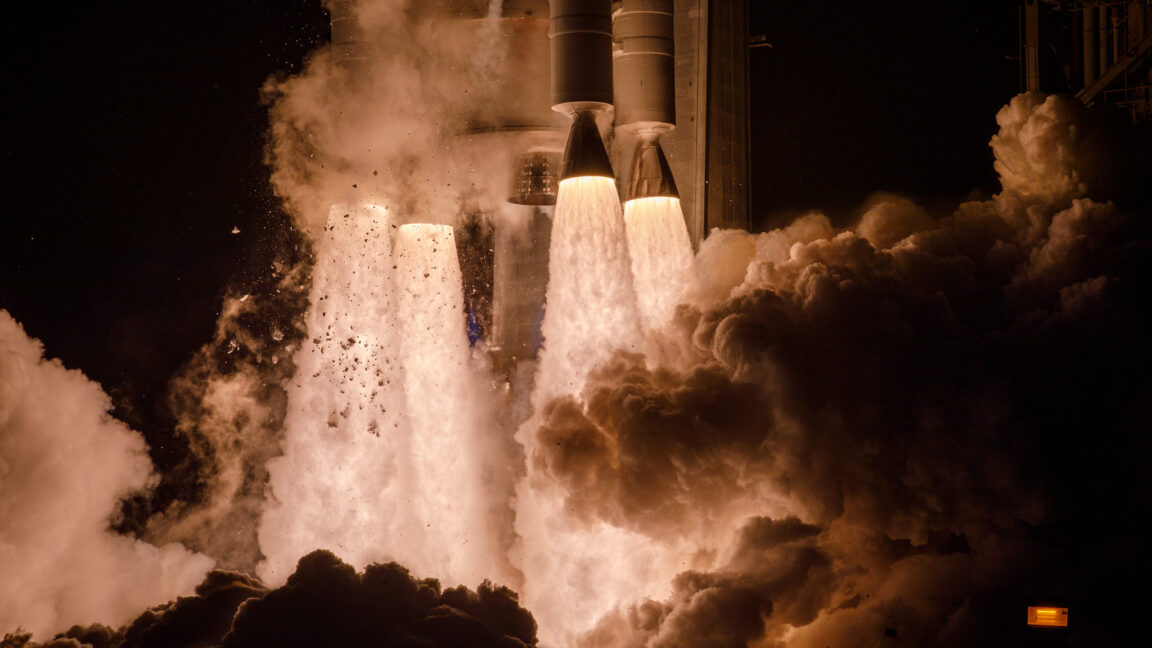
"The US Space Force owns and operates the GPS constellation, providing civilian and military-grade positioning, navigation, and timing signals to cell phones, airliners, naval ships, precision munitions, and a whole lot more."
"One reason for routinely launching GPS satellites is simply 'constellation replenishment,' said Col. Andrew Menschner, deputy commander of the Space Force's Space Systems Command. Old satellites degrade and die, and new ones need to go up and replace them."
"M-code is more resistant to jamming, and its encryption makes it more difficult to spoof, a kind of attack that makes receivers trust fake navigation signals over real ones. The upgrade also allows the military to deny an adversary access to GPS during conflict, while maintaining the ability for US and allied forces to use M-code."
The US Space Force operates the GPS constellation, providing positioning, navigation, and timing signals globally to civilian and military users. The constellation requires routine replenishment as satellites degrade, with at least 24 satellites needed for global coverage and currently 31 operational. New GPS satellites launched since 2005 include additional civilian signals for aviation and interoperability with Europe's Galileo system. The military has introduced M-code, an advanced military-grade signal designed for warfare that resists jamming and spoofing attacks. M-code enables the military to deny adversary access to GPS during conflict while maintaining capability for US and allied forces. Navigation signal interference is increasing globally, particularly in the Middle East and eastern Mediterranean regions.
#gps-constellation #satellite-navigation #military-signals #m-code-technology #space-force-operations
Read at Ars Technica
Unable to calculate read time
Collection
[
|
...
]