"Upon reaching orbit, the rocket's upper stage sent the satellites zipping off on their various missions. And so it went with the Mira spacecraft built by Impulse, which is known as an orbital transfer vehicle. Mira dropped off several small CubeSats and then performed a number of high-thrust maneuvers to demonstrate its capabilities. This was the second flight by a Mira spacecraft, so Impulse Space was eager to continue testing the vehicle in flight."
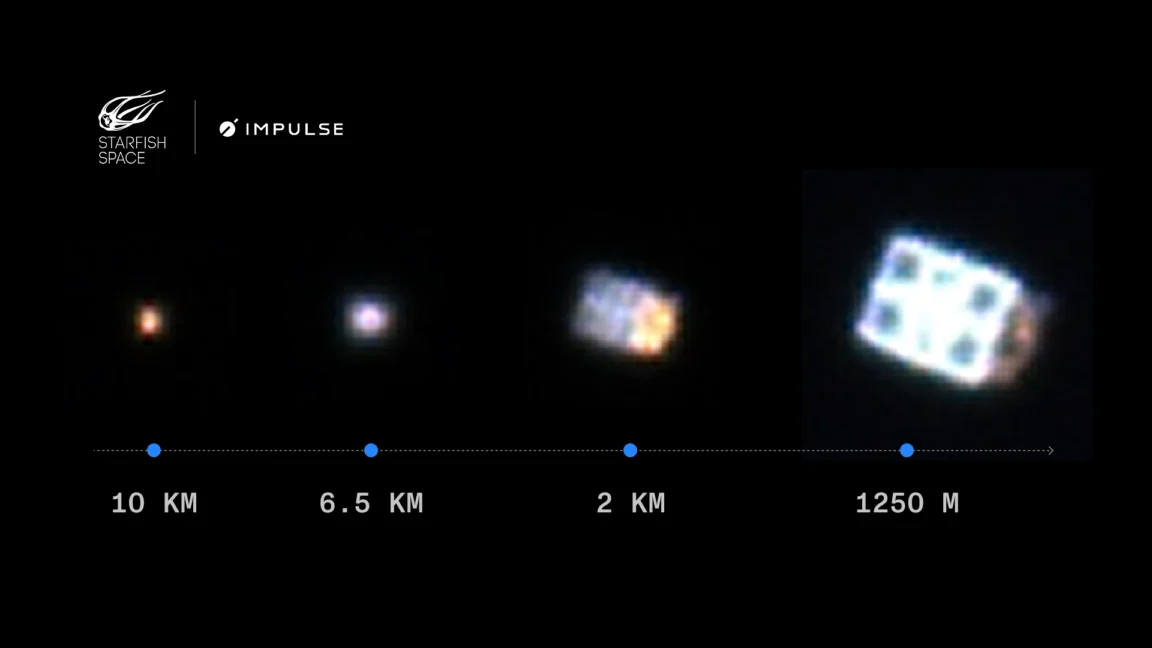
"But Starfish Space did not crash Mira. Rather, it activated its camera on board the spacecraft and started flying the vehicle. To what end? Founded in 2019, the Washington-based company seeks to build affordable spacecraft that can service satellites in space, providing propulsion or other aids to extend their lifetimes. Now, flying Mira, the company sought to demonstrate that a single lightweight camera system, along with its closed-loop guidance, navigation, and control software, could autonomously rendezvous with another spacecraft."
A Mira orbital transfer vehicle built by Impulse Space launched on a Falcon 9 with other satellites. The rocket's upper stage released payloads, and Mira deployed several CubeSats before executing high-thrust maneuvers to prove capability. On its second flight, Impulse handed control of Mira to Starfish Space, which installed its own software and took operational command. Starfish activated Mira's onboard camera and began flying the vehicle to validate autonomous operations. Starfish, founded in 2019 and based in Washington, aims to build affordable spacecraft to service satellites and demonstrated camera-based closed-loop guidance, navigation, and control for autonomous rendezvous.
#orbital-transfer-vehicles #autonomous-guidance-and-control #on-orbit-servicing #spacecraft-software
Read at Ars Technica
Unable to calculate read time
Collection
[
|
...
]