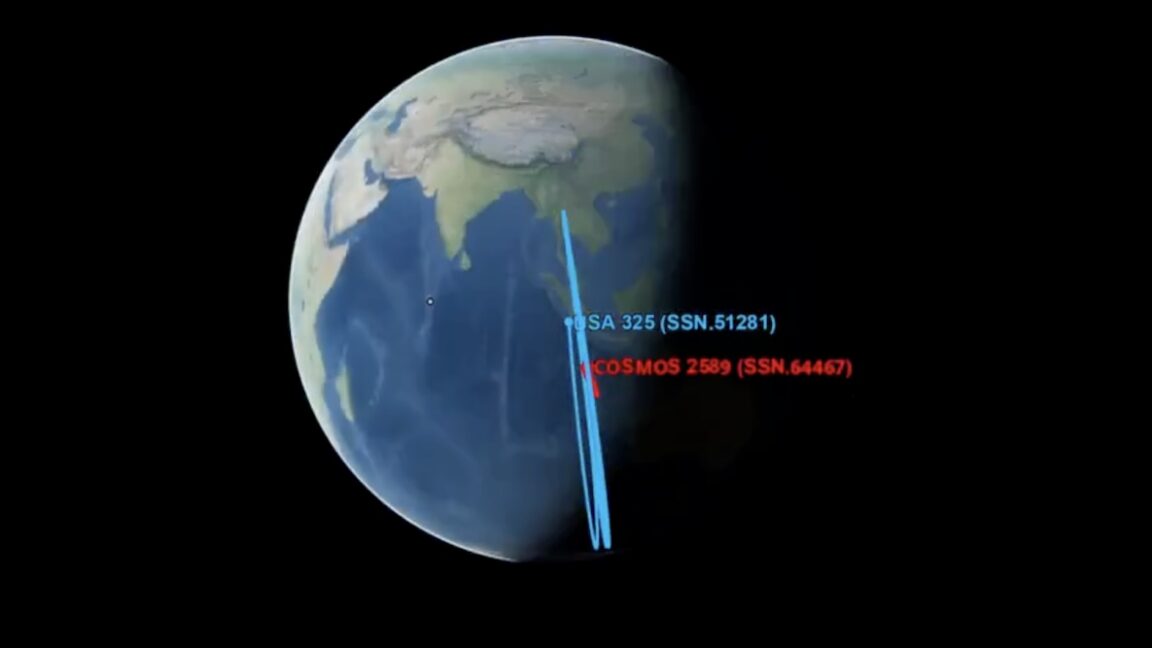
"GEO is special. The laws of orbital mechanics mean a satellite in this type of orbit, some 22,000 miles (36,000 kilometers) over the equator, moves around the Earth at the same rate as the planet's rotation, causing it to hover over the same location. Commercial and military-owned geosynchronous satellites typically spend years in the same location, or slot, to provide communications services to users."
"Until now, Russia's spying in geosynchronous orbit has primarily focused on eavesdropping on foreign communications. Russia launched two satellites, Olymp or Luch, to wander around geosynchronous orbit, moving from slot to slot to loiter near Western-owned communications satellites for several months at a time. The goal, according to Western analysts, was to listen in on or potentially jam signals relayed through these satellites, some of which route secure communications for US and NATO military forces."
"The trend today is geared toward reconnaissance and surveillance in GEO. Military forces and intelligence agencies want to know where other satellites are located, what they look like, and what they're capab"
"First, Russia has now joined the fray with the recent arrival of its own suspected inspector (or attack) satellite in GEO. Second, the US Space Force is poised to order more-perhaps many more-reconnaissance satellites of its own to send into the geosynchronous belt."
Satellites in geosynchronous orbit hover over fixed locations because they orbit Earth at the same rate as the planet’s rotation. This makes the orbit valuable for long-term communications services, with many commercial and military satellites remaining in assigned slots for years. Russia previously emphasized eavesdropping by deploying satellites that moved between geosynchronous slots and loitered near Western communications satellites to listen in or potentially jam signals. Recent developments show a shift toward reconnaissance and surveillance, including identifying where other satellites are located and observing what they look like. Russia has now arrived with a suspected inspector or attack satellite in geosynchronous orbit. The US Space Force is also expected to order additional reconnaissance satellites for the geosynchronous belt.
#geosynchronous-orbit #satellite-reconnaissance #space-security #us-space-force #russian-space-capabilities
Read at Ars Technica
Unable to calculate read time
Collection
[
|
...
]