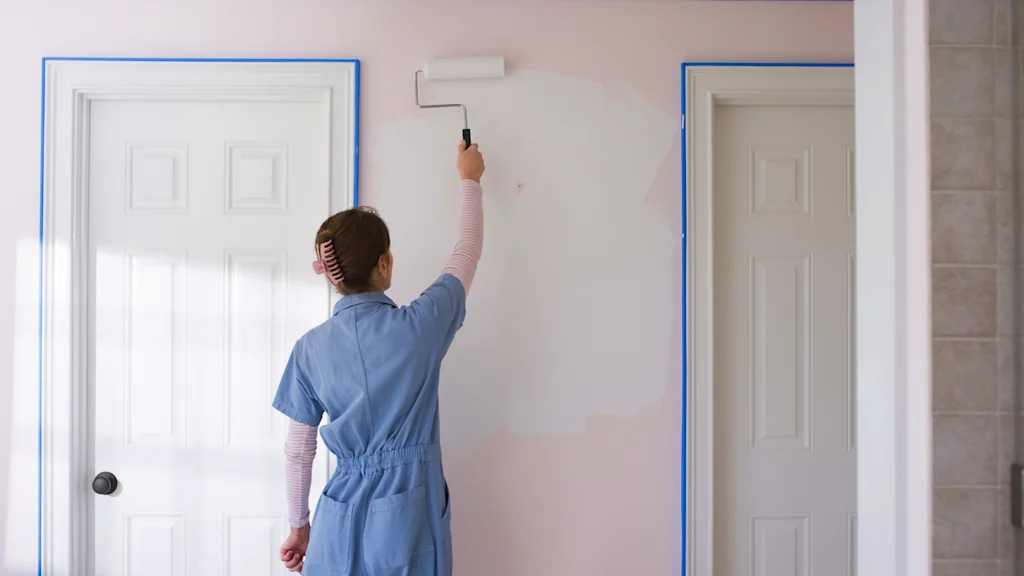
"It looks like ordinary paint, but a new coating called Lilypad Paint has a hidden ability to pull moisture out of the air. It works like a dehumidifier, without the energy use. If it's on the wall in your bathroom, it can suck water vapor out of the air after you've taken a shower. The paint holds the humidity in nano-size pores, and then slowly releases it as humidity levels fall in the room."
""As we're making buildings really, really tight thermally, they tend to trap in moisture and trap in air," Stein says. A new house might use less energy for heating and cooling but more for ventilation-and if the system doesn't work perfectly, the home could end up with mold. Older houses that don't have mechanical ventilation also often have mold problems."
"In conversations with the construction industry, Stein realized there was a clear demand for a product like this. Stein iterated on new materials that could passively regulate humidity inside a building and landed on the idea of a simple two-layer structure. It's "like a material machine that can regulate humidity in a space while also teaching direction to the wall," he says. The design moves moisture out of the wall while preventing it from getting in."
Lilypad Paint is a two-layer coating that passively pulls moisture from indoor air, storing water vapor in nanometer-scale pores and releasing it as room humidity decreases. A custom primer beneath the paint acts as a smart gatekeeper that prevents vapor from accumulating inside walls. The technology originated from physics research on energy-efficient homes, where increasingly airtight construction was causing trapped moisture and mold risks. Development focused on a simple two-layer material that directs moisture out of walls while stopping ingress. Conversations with the construction industry revealed demand, and the founder left academia in 2018 to commercialize the product.
Read at Fast Company
Unable to calculate read time
Collection
[
|
...
]