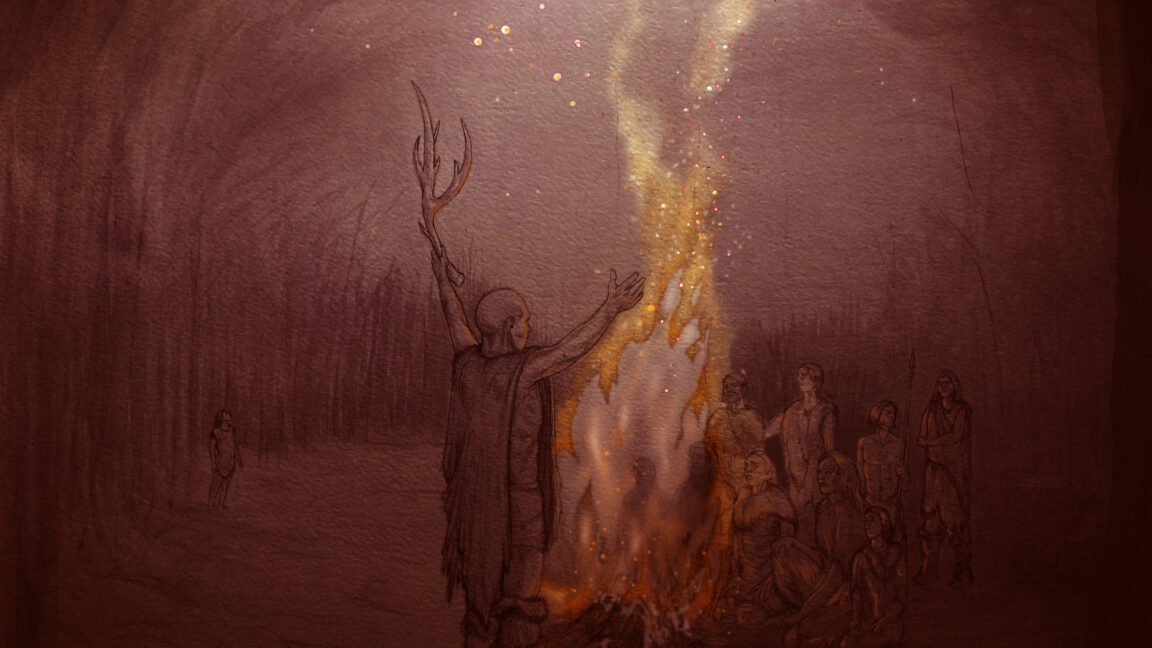
"Heat-reddened clay, fire-cracked stone, and fragments of pyrite mark where Neanderthals gathered around a campfire 400,000 years ago in what's now Suffolk, England. Based on chemical analysis of the sediment at the site, along with the telltale presence of pyrite, a mineral not naturally found nearby but very handy for striking sparks with flint, British Museum archaeologist Rob Davis and his colleagues say the Neanderthals probably started the fire themselves."
"The cozy domesticity of that camp apparently centered on a hearth about the size of a small campfire. What's left of that hearth today is a patch of clayey silt baked to a rusty red color by a series of fires; it stands out sharply against the yellowish clay that makes up the rest of the site. When ancient hearth fires heated that iron-rich yellow clay, it formed tiny grains of hematite that turned the baked clay a telltale red."
Heat-reddened clay, fire-cracked stone, and fragments of pyrite demonstrate a Neanderthal hearth at Barnham, Suffolk, dated to about 400,000 years ago. Chemical sediment analysis and the presence of pyrite—a tool for striking sparks with flint—indicate that Neanderthals likely ignited and maintained fires rather than relying solely on natural wildfires. The site preserves a small hearth area of clayey silt baked red by repeated fires, heat-shattered flint handaxes, and scattered heat-cracked flakes. The location near a stream-fed pond amid forest and grassland would have offered sheltered domestic space. The find represents the oldest known evidence of hominins creating and controlling fire.
Read at Ars Technica
Unable to calculate read time
Collection
[
|
...
]