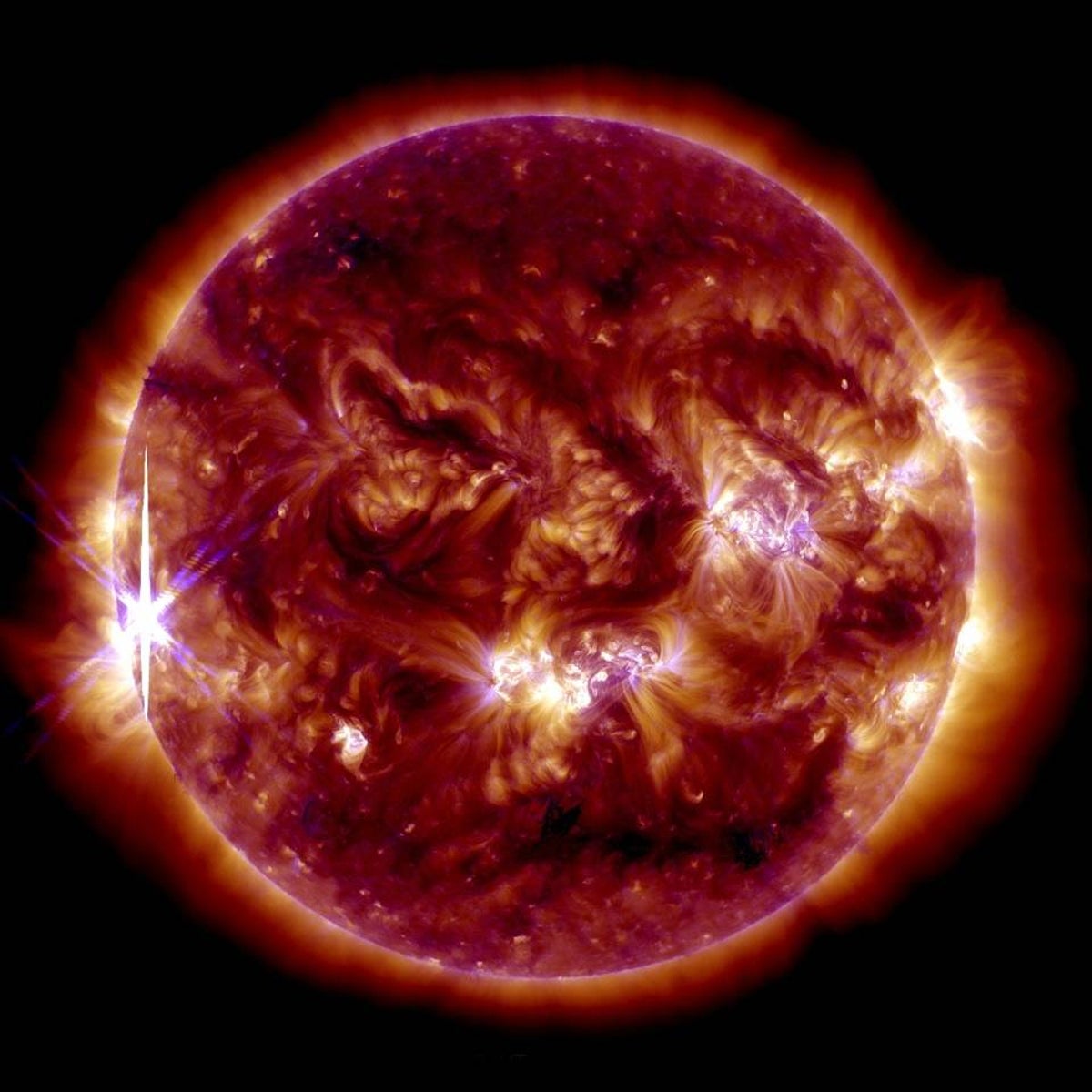
The sun unleashed multiple strong solar flares, including several X-class eruptions over a two-day span. NASA's Solar Dynamics Observatory recorded an X-class outburst at 7:33 A.M. EST, and three more X-class flares followed overnight. An X8.1-class burst occurred at 6:37 P.M. EST, the brightest since October 2024 and among the top twenty since 1996. Solar magnetic fields on the roiling plasma surface can snap and release huge bursts of energy and charged particles. Most expelled plasma is expected to pass Earth on Thursday, with possible northern lights. NOAA's Space Weather Prediction Center is monitoring the active region for further eruptions.
"The sun is putting on a show. On Sunday the star unleashed several strong and bright solar flares, including one of the most powerful eruptions seen in decades. Far from the steadily glowing orb we sometimes picture, the sun's surface is made up of roiling plasma thrown about by twisting magnetic fields. When these fields snap, they can throw out huge bursts of energy and charged particles into spacea solar flare."
"NASA's Solar Dynamics Laboratory caught one such outburst yesterday at 7:33 A.M. EST and gave it an X-class rankingthe most intense. Throughout last night, three more X-class flares followed amid dozens of smaller spurts of activity. But the crescendo came at 6:37 P.M. EST, when the sun let rip an X8.1-class burst. That makes it the brightest flare since October 2024 and among the top 20 since 1996, according to SpaceWeatherLive.com."
"Astronomers expect most of the expelled plasma to pass Earth sometime on Thursday. Specks of it could hit our atmosphere, potentially producing the spectacular celestial display the northern lights. The National Oceanic and Atmospheric Administration's Space Weather Prediction Center is carefully monitoring the region of the sun that is responsible for the flares, with more expected activity yet to come."
#solar-flares #x81-class-flare #space-weather #northern-lights #noaa-space-weather-prediction-center
Read at www.scientificamerican.com
Unable to calculate read time
Collection
[
|
...
]