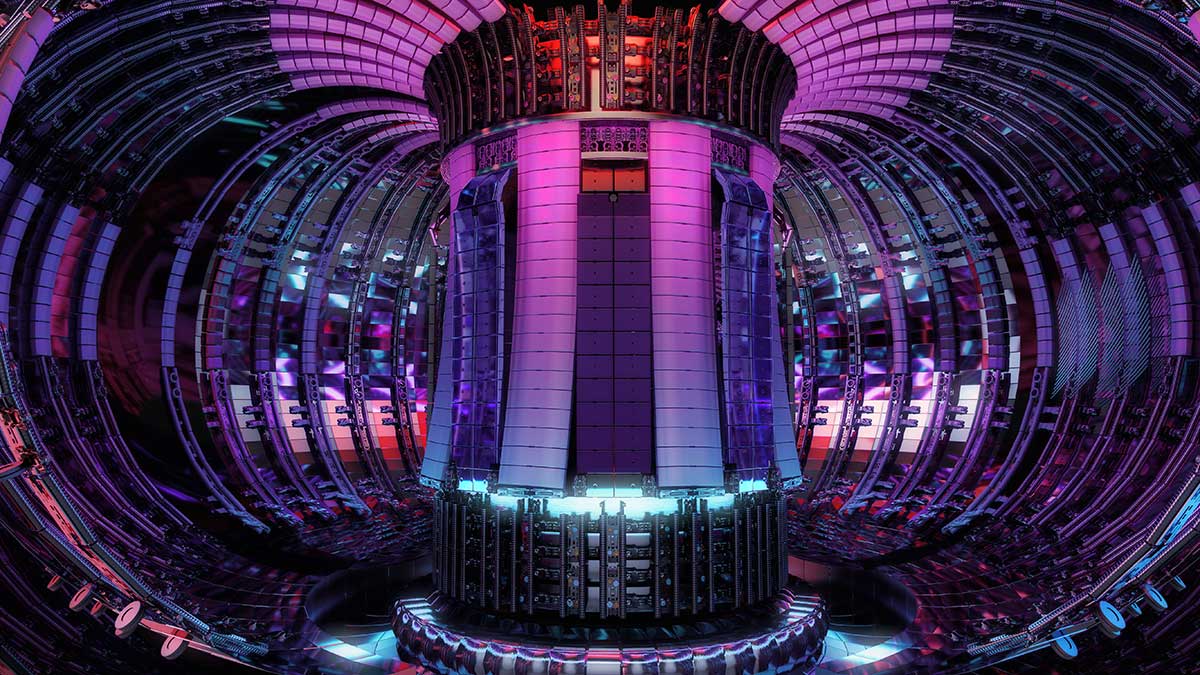
"Commonwealth Fusion Systems told the regional grid operator PJM that it plans to supply fusion-generated electricity from its Virginia plant, the Fall Line Fusion Power Station, aiming to deliver power to the grid by the early 2030s."
"For fifty years, fusion has been the subject of energy jokes, always said to be 30 years away. Now, that timeline is finally starting to change. Private fusion companies have raised about $9.8 billion so far. The U.S. Nuclear Regulatory Commission has officially separated fusion from fission in its rules, and at least three U.S. companies are actively seeking permits or building grid-scale plants."
"Fusion does the inverse: it forces two light nuclei together to form a heavier one. Most fusion designs use deuterium and tritium, both of which are isotopes of hydrogen. The reaction produces helium plus a high-energy neutron, releasing energy in the process. It is the same reaction that powers the Sun."
"Fission is the reaction in every commercial nuclear plant operating today, which splits a heavy atom (typically uranium-235 or plutonium-239) into lighter fragments, releasing energy and a cascade of neutrons that sustain a chain reaction. Fusion does the inverse: it forces two light nuclei together to form a heavier one."
A fusion company applied to connect a 400-megawatt fusion power plant directly to PJM, the largest U.S. electricity grid operator. Commonwealth Fusion Systems plans to supply fusion-generated electricity from the Fall Line Fusion Power Station in Virginia, aiming for grid power delivery in the early 2030s. Fusion has long been treated as decades away, but private companies have raised about $9.8 billion, and U.S. Nuclear Regulatory Commission rules have separated fusion from fission. Multiple companies are seeking permits or building grid-scale plants, though commercial fusion timelines remain uncertain. Fusion and fission both release nuclear energy, but fission splits heavy atoms and relies on a sustained chain reaction, while fusion combines light nuclei such as deuterium and tritium to form helium and a high-energy neutron.
Read at Earth911
Unable to calculate read time
Collection
[
|
...
]