"The fireflies were most likely to change their own flashing rhythm in response when the LED blinked almost, but not quite, at the same time as the fireflies. The males would speed up their next flash if the LED blinked just before and waited a bit longer for their next flash when the LED blinked right after."
"The team found that even a small number of interacting males can synchronize their flashes, but the periodic bursts only happen in groups larger than 15. And the flashes are correlated over several meters, evidence of long-range interactions typical of emergent collective behavior."
"The individual flash dynamics were essentially following a phase-response curve, which the authors then used to develop an 'integrate and fire' model explaining how fireflies adjust their flashing patterns in response to external light stimuli and neighboring firefly signals."
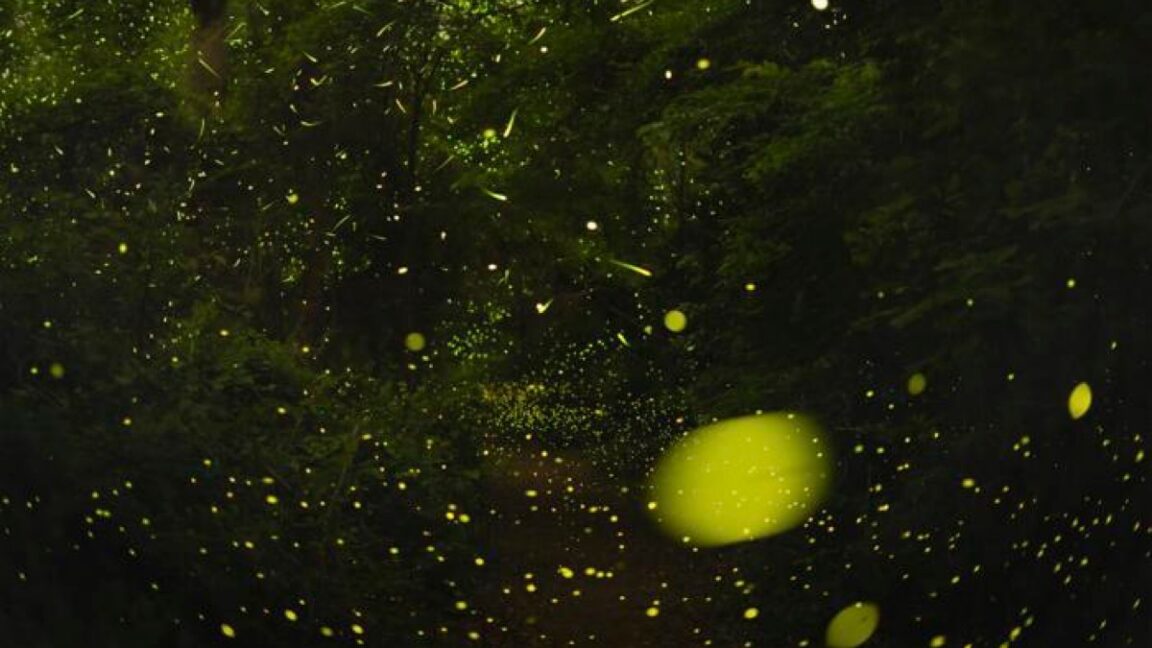
Researchers studied firefly flash synchronization through field experiments at Congaree National Park over four years. They exposed captured fireflies to LED lights mimicking firefly flashes at varying intervals. Fireflies responded most strongly when the LED blinked nearly, but not exactly, at the same time as their own flashes. Males accelerated their next flash when the LED preceded them and delayed when it followed. This behavior resembles audience members synchronizing clapping at a concert. Mathematical analysis revealed the fireflies followed phase-response curves, allowing researchers to develop models explaining individual flash dynamics and collective synchronization patterns.
#firefly-synchronization #collective-behavior #phase-response-curves #bioluminescence #emergent-dynamics
Read at Ars Technica
Unable to calculate read time
Collection
[
|
...
]