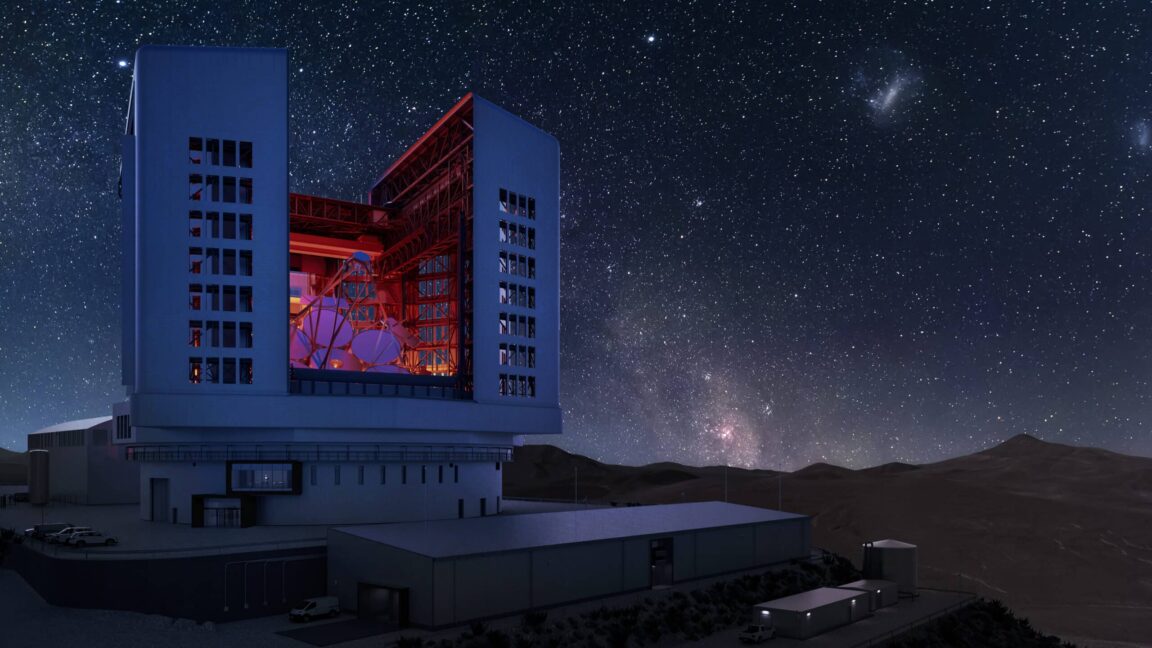
The Giant Magellan Telescope (GMT) is a next-generation optical/infrared observatory designed to dramatically increase light-gathering and resolution relative to earlier ~10-meter class instruments. Two decades ago, plans emerged to leap toward ~30-meter-class telescopes to observe fainter and more distant objects. The Thirty Meter Telescope project has been delayed by local protests and lost NSF support, while the European Extremely Large Telescope (39.5 meters) is progressing toward first light around 2029. GMT faces funding and technical hurdles, carries an approximate $2 billion price tag, and at 25.4 meters now represents a primary path for US-based astronomy competitiveness. Dan Jaffe serves as the new president of the telescope executive team.
"At the time the proposed telescope was one of three contenders to make a giant leap in mirror size from the roughly 10-meter diameter instruments that existed then, to approximately 30 meters. This represented a huge increase in light-gathering potential, allowing astronomers to see much further into the universe-and therefore back into time-with far greater clarity."
"An international consortium to build the Thirty Meter Telescope in Hawaii ran into local protests that have bogged down development. Its future came further into question when the US National Science Foundation dropped support for the project in favor of the Giant Magellan Telescope. Meanwhile the European Extremely Large Telescope (ELT) has advanced on a faster schedule, and this 39.5-meter telescope could observe its first light in 2029."
"This leaves the Magellan telescope. Originally backers of the GMT intended it to be fully operational by now, but it has faced funding and technology challenges. It has a price tag of approximately $2 billion, and although it is smaller than the European project, the 25.4-meter telescope now represents the best avenue for US-based astronomy to remain competitive in the field."
#giant-magellan-telescope #extremely-large-telescopes #funding-and-scheduling #thirty-meter-telescope
Read at Ars Technica
Unable to calculate read time
Collection
[
|
...
]