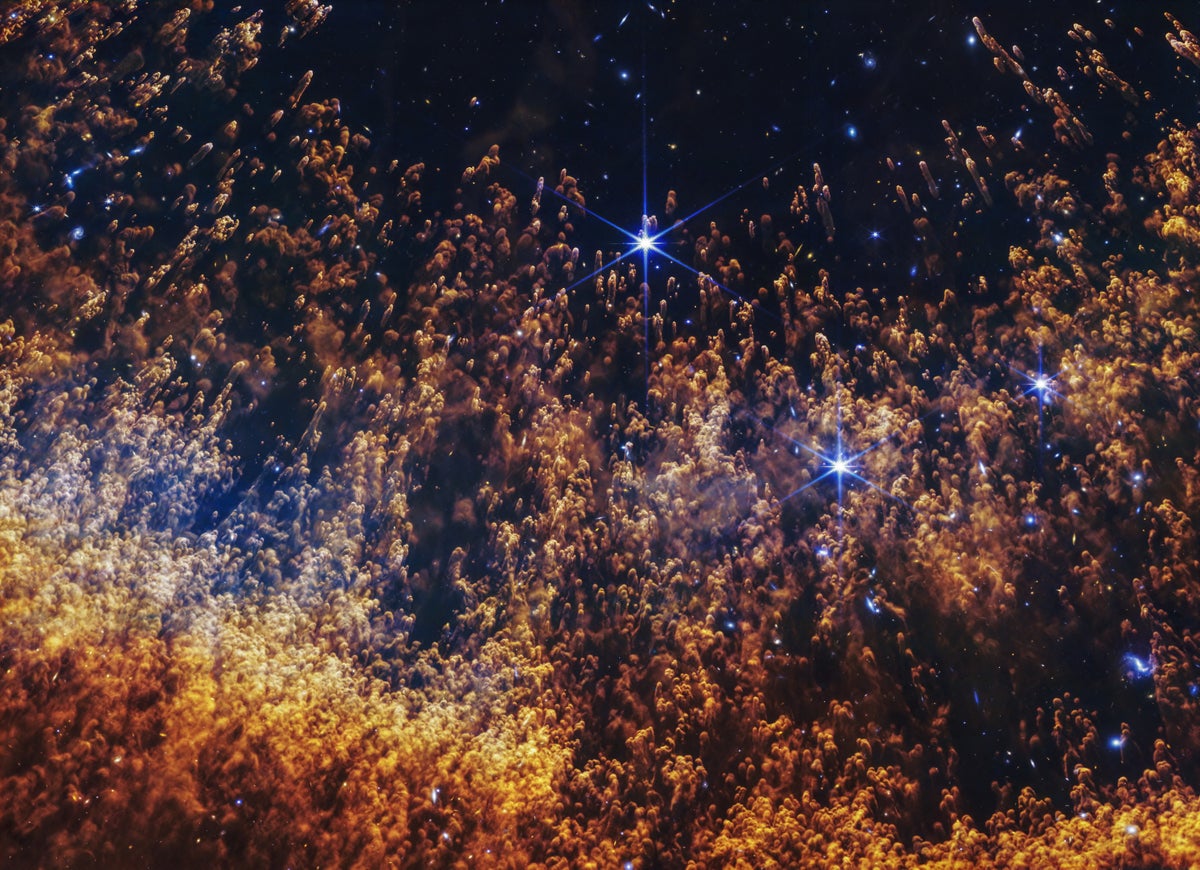
"Even for astronomers who have gazed upon the same cosmic object over their whole career, new portraits of these celestial bodies from the James Webb Space Telescope (JWST) have the power to delight and amaze. See, for example, JWST's latest images of the iconic Helix Nebula, also known as the Eye of God, a stellar grave site some 650 light-years from Earth in the constellation Aquarius."
"The Helix Nebula is an example of what astronomers call planetary nebulas, a nod to their orblike shape, as seen in early telescopes. But the appearance of planetary nebulas has little to do with planets at allthese nebulas are actually roiling clouds of hot gas that emanate from dying sunlike stars and linger after their deaths. These echoes do still have a planetary connection because their wafting clouds of gas and dust serve as the raw material for new generations of stars and planets."
NASA's James Webb Space Telescope produced a detailed image of a portion of the Helix Nebula, revealing cometlike knots, fierce stellar winds and shells of ejected gas interacting with the star's surroundings. The Helix Nebula, also called the Eye of God, lies about 650 light-years away in Aquarius. Planetary nebulae form when sunlike stars expel their outer layers near the ends of their lives, creating roiling clouds of hot gas. Those gas and dust remnants persist after stellar death and provide raw material for future stars and planets. JWST images often capture far-distant background galaxies along with nebular detail.
Read at www.scientificamerican.com
Unable to calculate read time
Collection
[
|
...
]