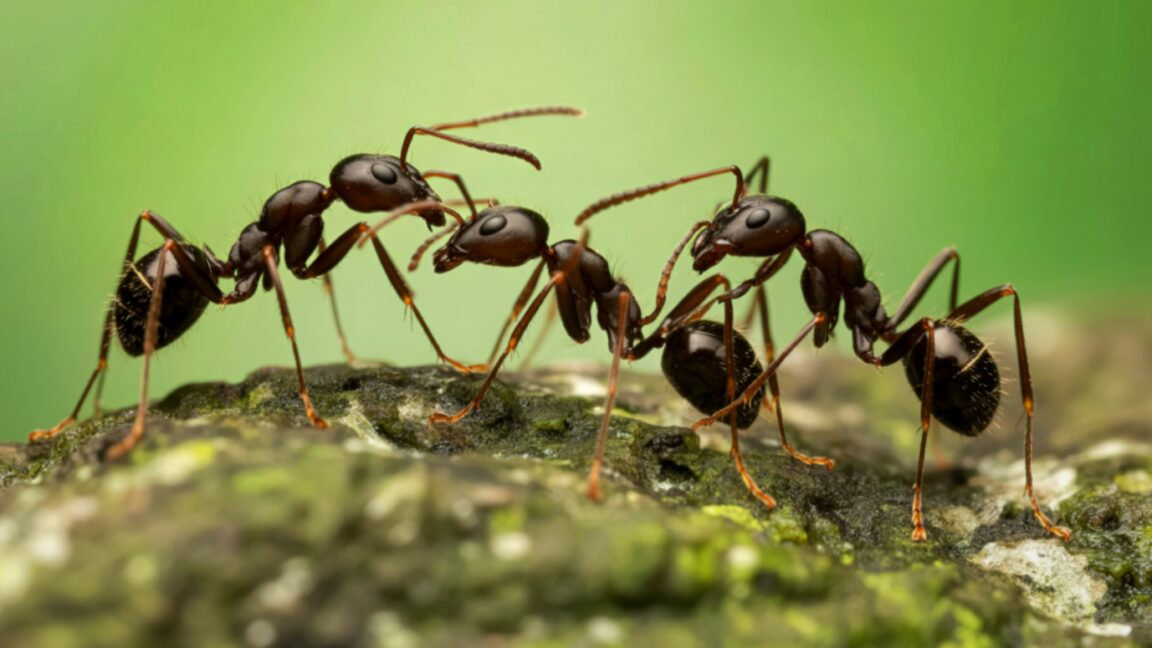
"In the insect world, the exoskeleton known as the cuticle serves as a protective barrier against predators, pathogens, and desiccation, while providing the structural framework for muscle attachment. But this protection comes at a price. Building a robust cuticle requires significant amounts of nitrogen and rare minerals like zinc and manganese. While skimping on armor for an individual insect may be a death sentence, the evolution of ants apparently found a way around it."
"Economo's team hypothesized that the metabolic balance behind investing in cuticles in social insects like ants could favor the collective over the individual. The idea was that a colony of 10,000 workers could lose a few individuals to a predator without much consequence, so investing heavily in each worker's defenses would seem like a waste of precious nutrients. To test this hypothesis, they examined whether ant lineages that maintain massive, specialized workforces reduce the investment in their individual workers' exoskeletons."
Ant societies with large, specialized workforces invest less per individual in robust exoskeletons, producing smaller, cheaper workers. The cuticle serves as protection and structural support but demands substantial nitrogen and rare minerals such as zinc and manganese, making strong armor metabolically costly. Large colonies can absorb the loss of some workers without severe consequences, lowering selective pressure for heavily armored individuals. The metabolic trade-off can therefore favor collective redundancy over individual robustness. Comparative analysis across ant lineages indicates that those maintaining massive specialized workforces tend to reduce material investment in worker exoskeletons.
Read at Ars Technica
Unable to calculate read time
Collection
[
|
...
]