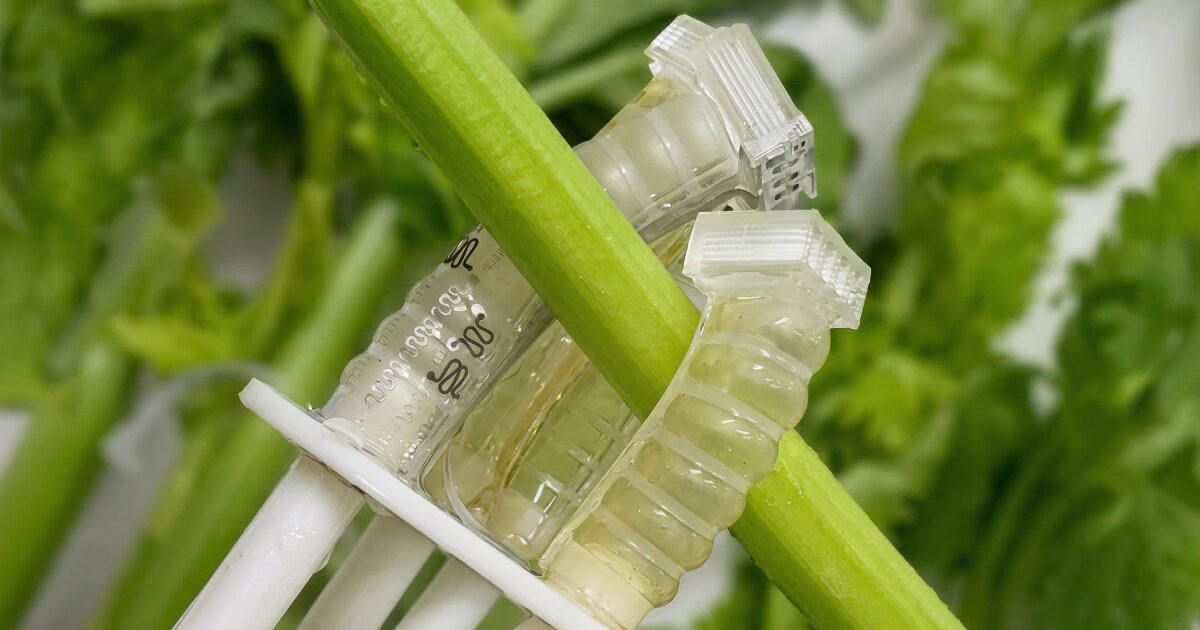
"The body of the robotic fingers is built from polyglycerol sebacate, a synthetic elastomer made from glycerol and sebacic acid. Glycerol is a byproduct of biodiesel production while sebacic acid is derived from castor oil, and both of them are plant-based. Polyglycerol sebacate is safe since it is already used in medical implants because the body can absorb it without a toxic response."
"For the soft robotic fingers, the researchers used a class of electronics called transient inorganics, or components that are engineered to dissolve in specific conditions. The adhesive that bonds the electronic layer to the elastomer body is polyanhydride-based, a polymer class that breaks down when it comes into contact with water."
"The study finds that the oats grew and that the germination rates were within the range of oats grown in control soil. The silicon, molybdenum, and magnesium left behind by the decomposed electronics didn't prevent growth, so in the end, the soft robotic fingers acted as a fertilizer."
Researchers at Seoul National University developed stretchable soft robotic fingers constructed from polyglycerol sebacate, a synthetic elastomer derived from plant-based glycerol and sebacic acid. The electronic components use transient inorganic materials engineered to dissolve under specific conditions, bonded with water-soluble polyanhydride adhesive. Testing demonstrated complete degradation when composted, with the resulting material supporting oat germination at rates comparable to control soil. The silicon, molybdenum, and magnesium residues from decomposed electronics did not inhibit plant growth, effectively transforming the robotic system into a functional fertilizer while eliminating environmental waste concerns.
#biodegradable-robotics #sustainable-materials #transient-electronics #environmental-innovation #plant-based-polymers
Read at designboom | architecture & design magazine
Unable to calculate read time
Collection
[
|
...
]