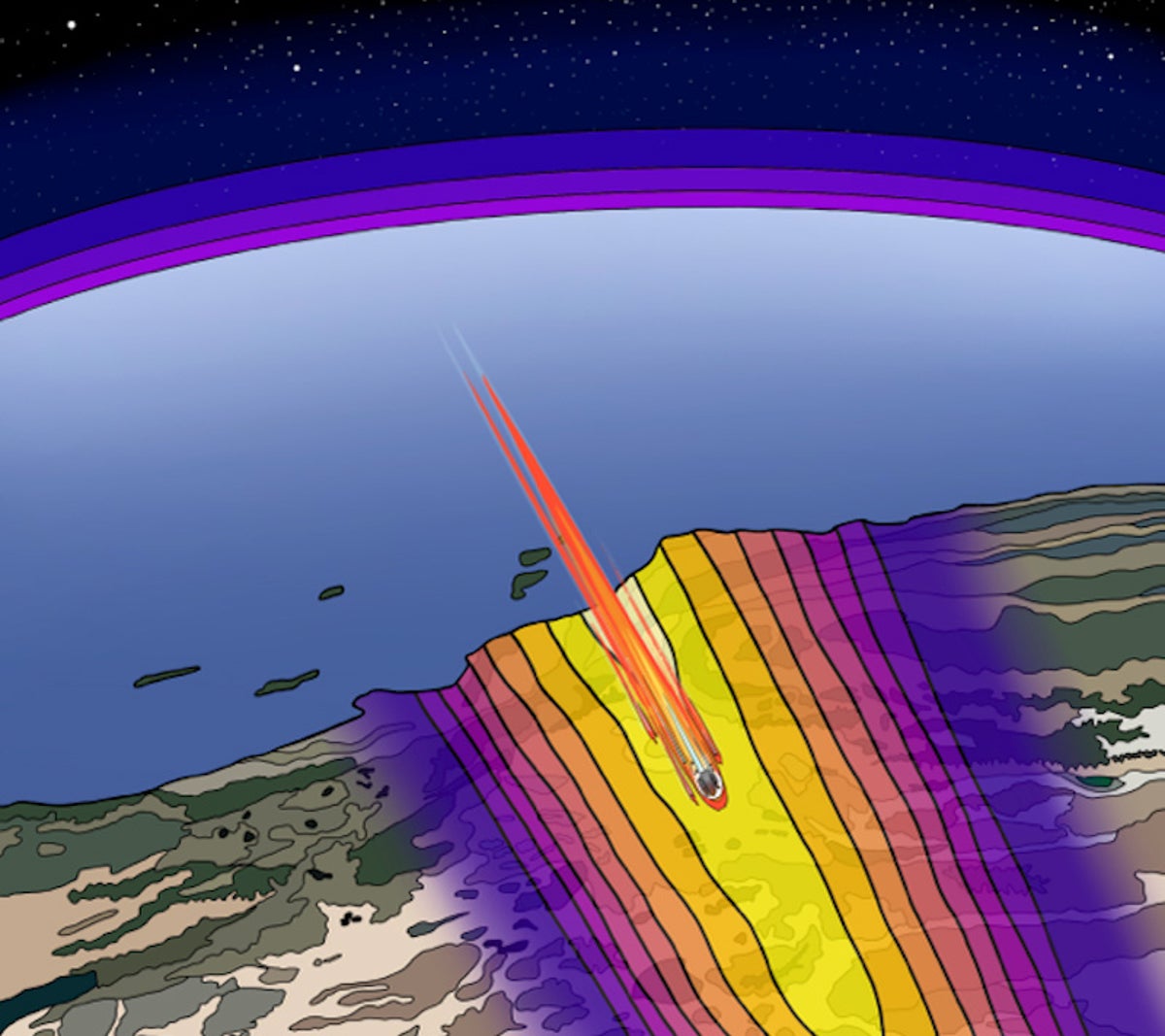
Global launch frequency has increased the volume of hazardous space debris reentering Earth's atmosphere, increasing the probability of ground impacts. Small debris typically burns up during descent, while larger spacecraft often undergo controlled reentries into remote regions after propulsion maneuvers. Rising space activity has produced more uncontrolled reentries that are harder to track and pose greater risk. Seismometer networks can record sonic booms generated by reentering objects, enabling reconstruction of descent trajectories and localization of impact sites. Seismic detection operates both day and night and leverages existing operational networks, offering a low-added-cost complement to optical and radar monitoring.
"As global numbers of space launches relentlessly skyrocket, so, too, does the amount of dangerous space debris that reenters the atmosphere and falls back to Earth, raising the odds that, sooner or later, disaster will strike. Most space debris is so small that it burns entirely as it falls. Larger objects from NASA and most other space agencies typically follow a controlled reentry: nudged down by rocket motors, they plunge toward remote and desolate regions of the planet."
"Optical telescopes and radar systems routinely monitor space junk, he notes, but both struggle to track debris as it disintegrates during reentryand optical systems really only work at night. Sonic booms should work whether it's day or night, McDowell says. And since these seismic networks are already operational, you could get this almost for free,' once you know how to do the analysis."
Read at www.scientificamerican.com
Unable to calculate read time
Collection
[
|
...
]