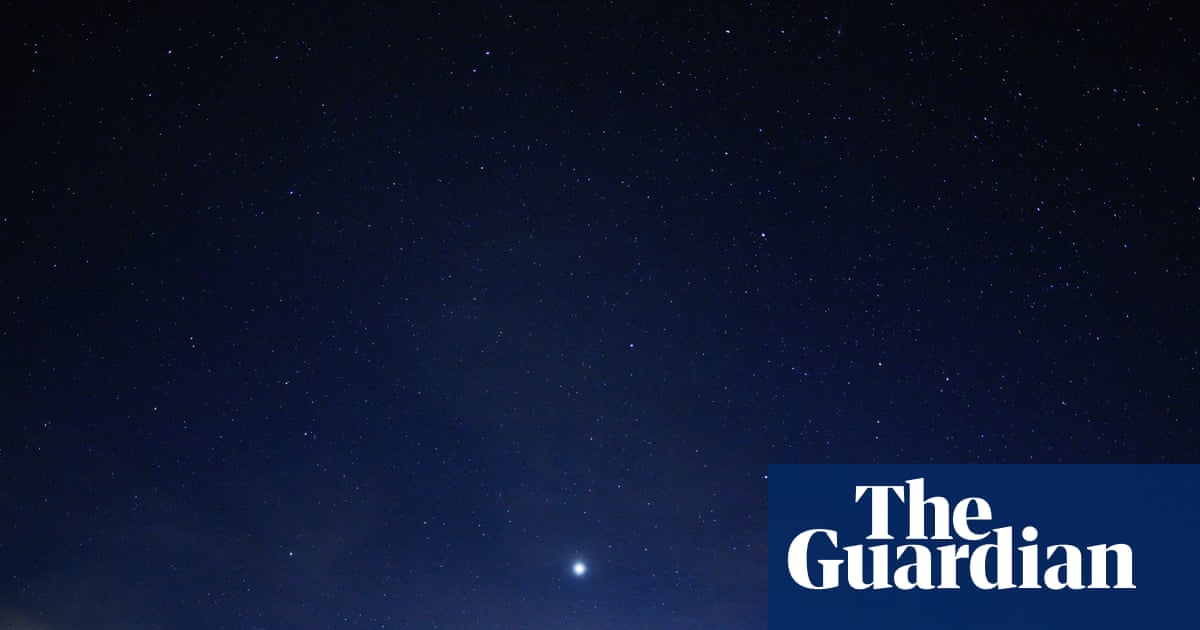
"At the time of the alignment, Greg Brown, an astronomer at the Royal Observatory Greenwich, told PA Media: Groups of three, four or even five planets being visible aren't uncommon, regularly appearing throughout each year But the more planets are involved, the more things need to be aligned to be visible at once. According to Nasa, multi-planet viewing opportunities can last from weeks to more than a month, as planetary movements are slow and gradual."
"Some people can view the alignment as early as this weekend, but what makes 28 February particularly notable is that the planets will be most tightly grouped and multiple planets can be seen together in the evening sky. Four planets Mercury, Venus, Mars and Jupiter will be visible to the naked eye. Uranus and Neptune, however, will require binoculars or a telescope as they orbit in the cold, distant outer regions of the solar system."
Six planets—Mercury, Venus, Jupiter, Saturn, Uranus and Neptune—will appear closely aligned in the night sky on 28 February, creating a rare planetary parade. Planetary alignments occur because the planets orbit the Sun in roughly the same flat plane, the ecliptic, so they can appear to line up from Earth's perspective despite vast actual separations. The alignment is a visual effect; planets remain millions to billions of kilometres apart. Uranus and Neptune require binoculars or a telescope to see, while Mercury, Venus, Mars and Jupiter can be visible to the naked eye. Multi-planet viewings can last weeks to over a month.
Read at www.theguardian.com
Unable to calculate read time
Collection
[
|
...
]