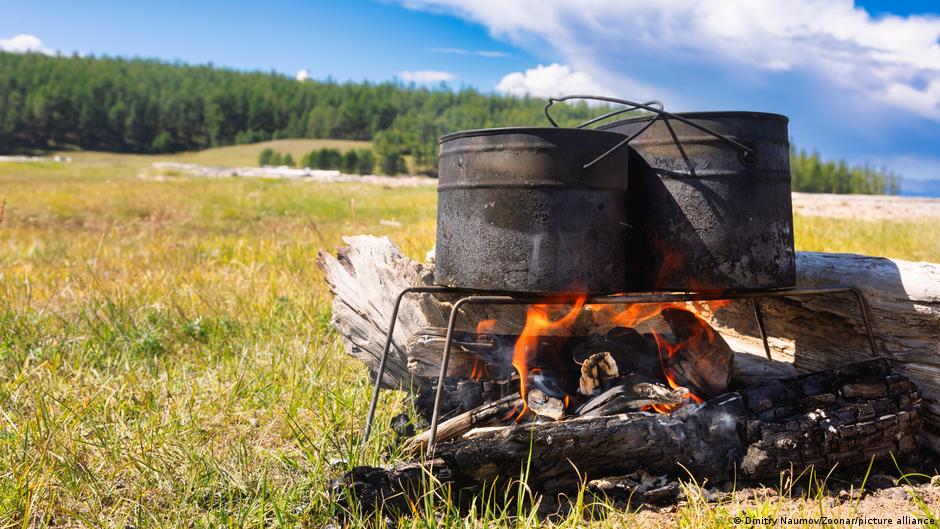
"The authors wrote that the site seems to provide "unequivocal evidence of deliberate fire-making" that "has remained elusive" because of the difficulties in distinguishing between naturally occurring fires being used by prehistoric humans and controlled fires being created on demand. Early humans are thought to have first started making opportunistic use of naturally occurring fires, for instance from lightning strikes or forest fires, as much as a million years ago."
"At an old clay pit for making bricks near the village of Barnham, the researchers found a patch of heated clay, some heat-shattered handaxes and two pieces of iron pyrite. This material creates sparks when struck against flint to ignite tinder, and is also not readily available in the vicinity, suggesting the Neanderthals brought it to the watering hole specifically for the purpose."
A hearth in Barnham, Suffolk, dating to roughly 415,000 years ago, contains heated clay, heat-shattered handaxes, and imported iron pyrite. The iron pyrite produces sparks when struck against flint and is not naturally available nearby, suggesting intentional transport to the site to ignite tinder and maintain a campfire. The assemblage indicates deliberate fire-making rather than opportunistic use of natural fires and marks one of the earliest known examples of controlled fire production by Neanderthals. Fragments of iron pyrite were first recovered from the site in 2017. The evidence pushes back timelines for habitual fire-making among early humans.
Read at www.dw.com
Unable to calculate read time
Collection
[
|
...
]