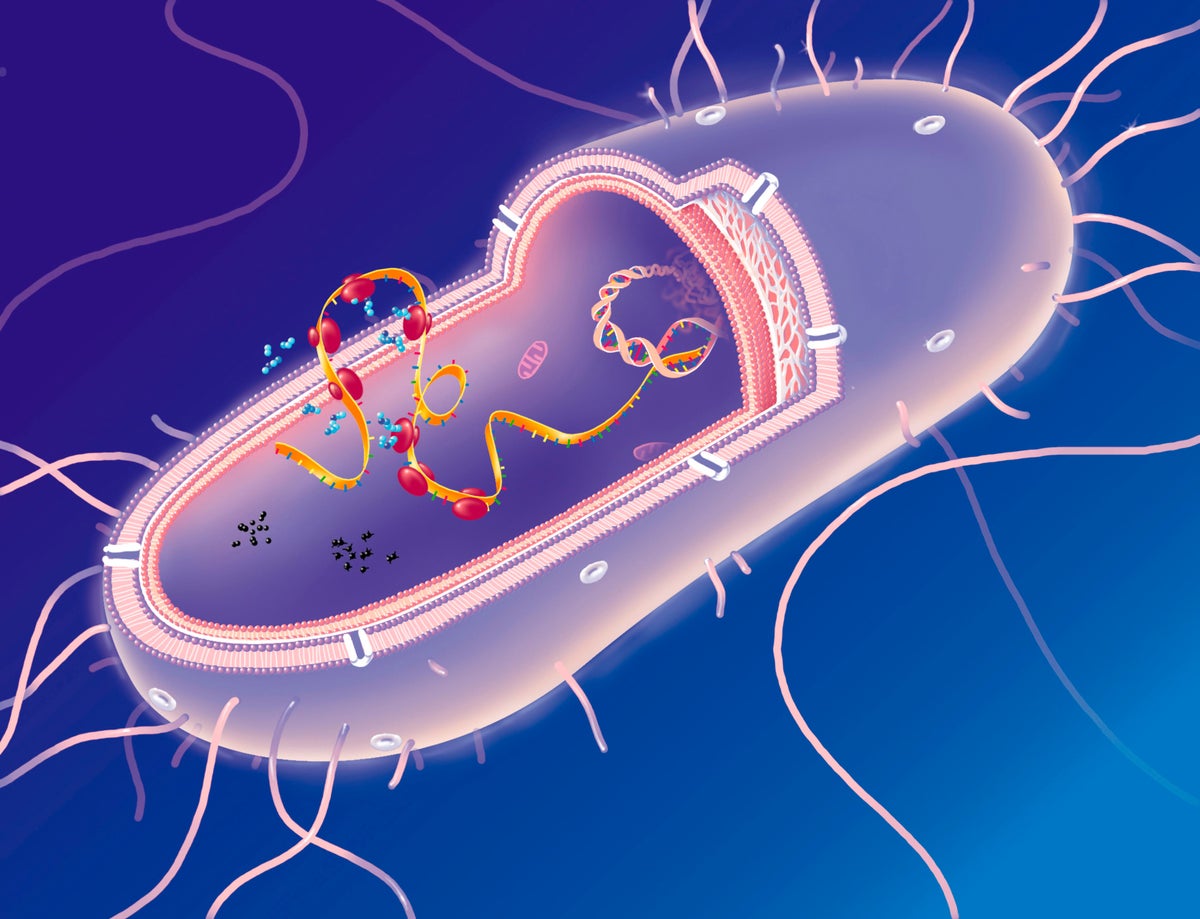
"The engineered strain still uses the targeted amino acid, isoleucine, throughout most of its genome. But the result suggests that one of life's most ancient and essential machines can tolerate at least partial simplification."
"Researchers think all life today descends from an ancient, single-celled organism that lived more than four billion years ago. But some suspect that earlier, simpler life-forms that predate even this common ancestor may have run on a leaner chemistry."
"The underlying question that we seek to ask is what early life looks like, says Harris H. Wang, a professor of systems biology at the Columbia University Irving Medical Center and senior author of the study."
"Think about language. There are 26 letters in the English alphabet, but do you really need 26, or can you simplify that to 25 or 24? Wang says."
Researchers engineered an Escherichia coli strain to test the limits of protein design by removing isoleucine from its ribosomal proteins. The strain still uses isoleucine in most of its genome, indicating that life can tolerate partial simplification. This study suggests that AI can assist biologists in exploring the boundaries of life's chemistry and understanding the characteristics of early life forms. The research aims to investigate whether modern cells can be engineered to reflect simpler, ancient life-forms.
Read at www.scientificamerican.com
Unable to calculate read time
Collection
[
|
...
]