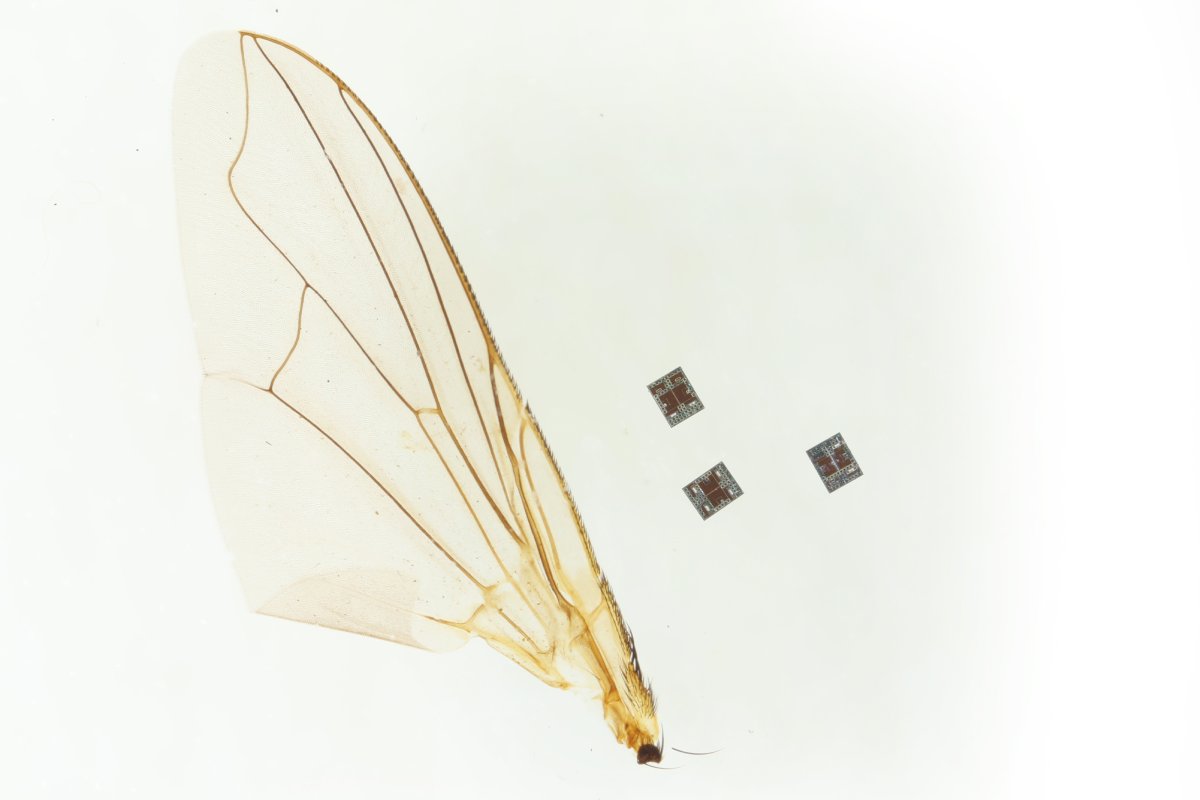
"It's not an actual billionth of a meter in size, but being smaller than a grain of salt, it is still outrageously tiny: a microrobot. The work, described in a new study in the journal Science Robotics, could be a platform for one day building microscopic robots that could be deployed inside the human body to perform all sorts of medical miracles, like repairing tissues or delivering treatment to areas difficult for surgeons to access."
"Building a microscopic robot that can move, sense its surroundings, and make decisions on its own has evaded scientists for decades. According to the team, roboticists have typically relied on externally controlling the microrobots so they can operate at smaller scales, but sacrificing their ability to process information. That prevents the robots from reacting with their environment, leaving them with a limited number of pre-programmed behaviors they can carry out - and as a result, limited real-world usefulness."
A team from the University of Pennsylvania and University of Michigan built a sub-millimeter robot that integrates a computer, motor, and sensors. The microrobot is smaller than a grain of salt and could become a platform for microscopic devices deployed inside the human body to repair tissues or deliver treatments in hard-to-reach areas. The device is highly experimental and not yet suitable for internal human use, but researchers anticipate practical applications within about ten years. Traditional microrobots required external control and lacked onboard processing, limiting responsiveness; the new robot can sense, process information, and act autonomously, expanding possible real-world uses.
Read at Futurism
Unable to calculate read time
Collection
[
|
...
]