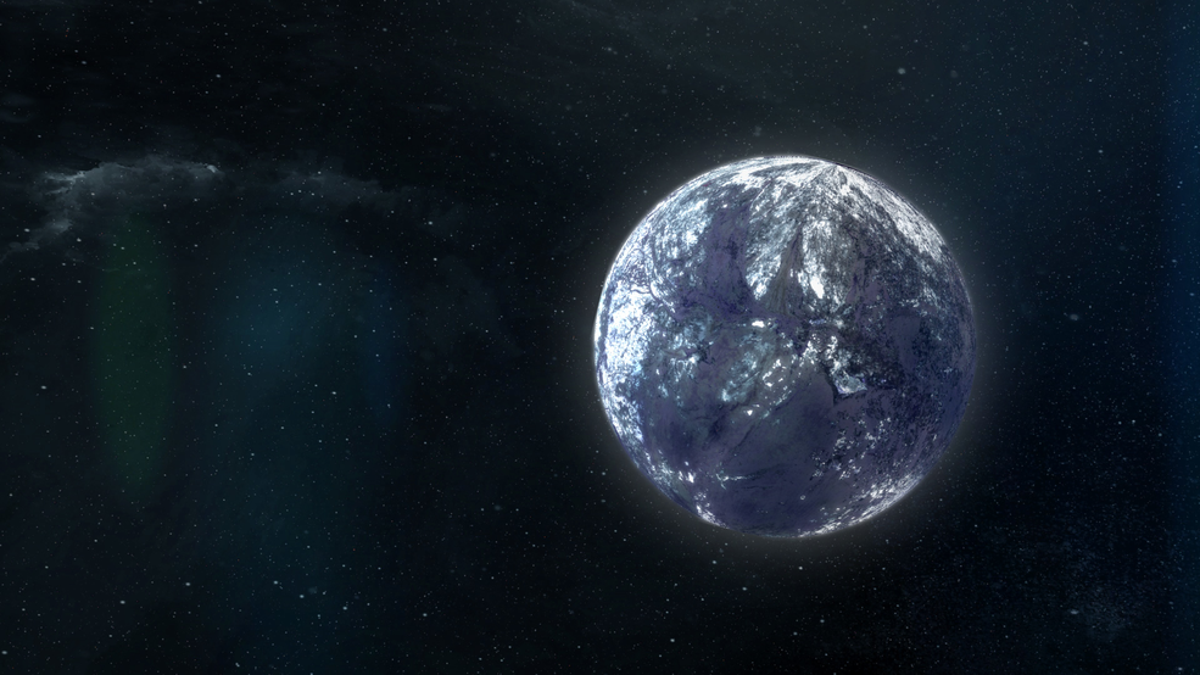
"In a new study published in Science on Thursday, scientists show how they measured the mass of one such rogue planet for the first timea breakthrough that could enable further studies of these strange lonely worlds. Instead of looking at the planet's orbit, the research team, led by Subo Dong of Peking University, instead analyzed how the planet's gravity bent the light from a distant star, in a so-called microlensing event, from two separate vantage points: Earth and the now-retired Gaia space observatory."
"What's really great about this work, and really noteworthy, is that it's the first time we've got a mass for these objects, says Gavin Coleman, a postdoctoral researcher at Queen Mary University of London, who authored a related commentary also published in Science but was not involved in the study. This was purely because the authors had both ground-based observations and Gaia, looking at observations from two different places. What they found is that the planet has about the same mass as Saturn."
Rogue or free-floating planets drift through interstellar space without a host star, making size and mass measurements difficult. A microlensing observation captured light bending from a distant star by one such planet. Observations from Earth and the now-retired Gaia space observatory recorded the event with about a two-hour time offset, producing a parallax-like signal. That time difference enabled determination of the lensing object's distance and an estimate of its mass. Combining ground-based data with Gaia's offset view yielded the first mass measurement for a free-floating planet, indicating a mass similar to Saturn and suggesting constraints on its origin.
Read at www.scientificamerican.com
Unable to calculate read time
Collection
[
|
...
]