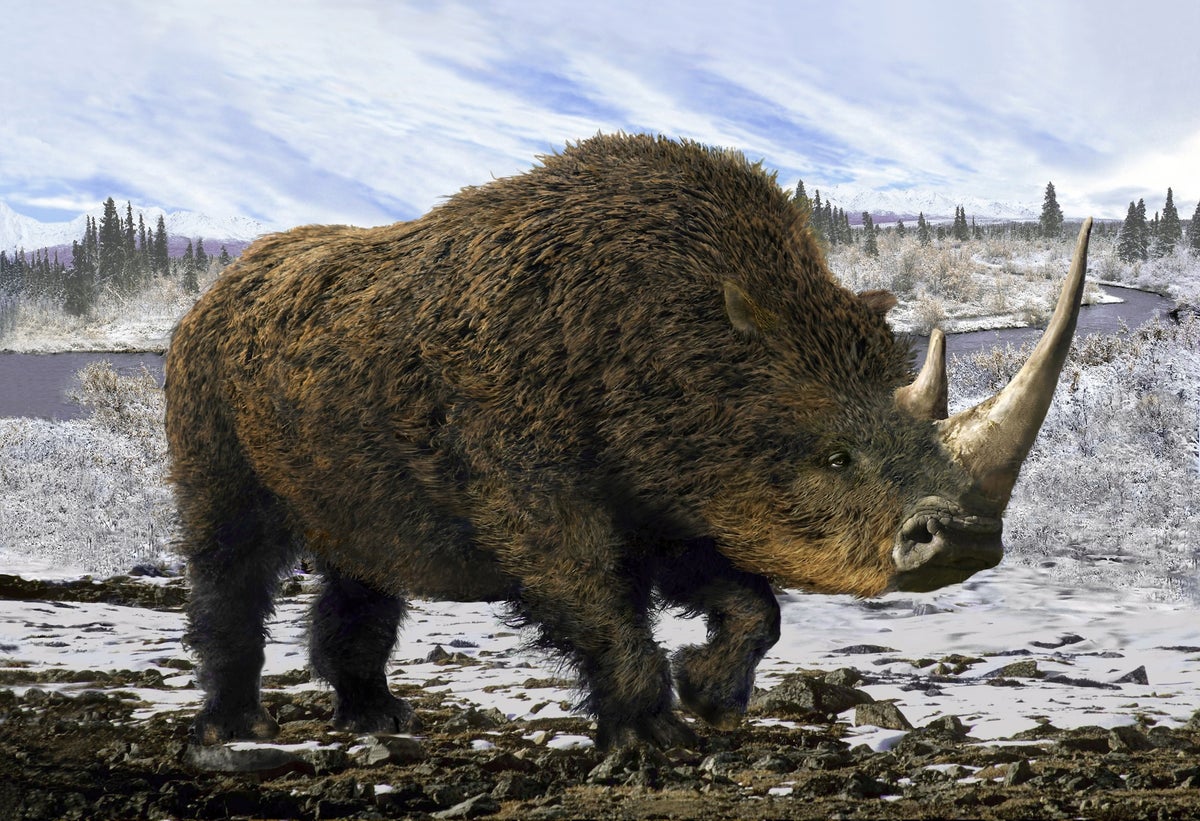
Scientists sequenced the woolly rhinoceros genome from stomach contents of a naturally mummified Pleistocene wolf pup recovered in Siberian permafrost. The woolly rhinoceros (Coelodonta antiquitatis) had long, shaggy hair, two horns, and a body size comparable to modern rhinos. The fossil record places extinction around 14,000 years ago, though some evidence suggests survival as late as 9,000 years ago. Genome sequencing of extinct megafauna can help identify causes of extinction and inform conservation. A preserved tissue fragment about 14,400 years old provides a rare late-survival example. Genetic data show no indication of a declining population, instead suggesting stability and genetic health with DNA similar to older specimens.
"Scientists have successfully sequenced the genome of the long-extinct woolly rhinoceros from an unusual place: the stomach contents of a naturally mummified Pleistocene wolf pup from Siberia. As its name suggests, the woolly rhinoceros (Coelodonta antiquitatis) had long, shaggy hair that made it perfectly suited for life on the frigid Eurasian steppe. The animal, which sported two horns on its snout, was comparable in size to modern rhino species."
"The current fossil record suggests the animal went extinct around 14,000 years ago (although there is some evidence that this may have happened as recently as 9,000 years ago). Sequencing the genomes of such extinct megafauna can help identify the culprit behind their extinction, providing tools to counter the pervasive threats species face today. At about 14,400 years of age, a preserved tissue fragment of the woolly rhino that the young wolf (Canis lupus) ate is one of the few examples."
Read at www.scientificamerican.com
Unable to calculate read time
Collection
[
|
...
]