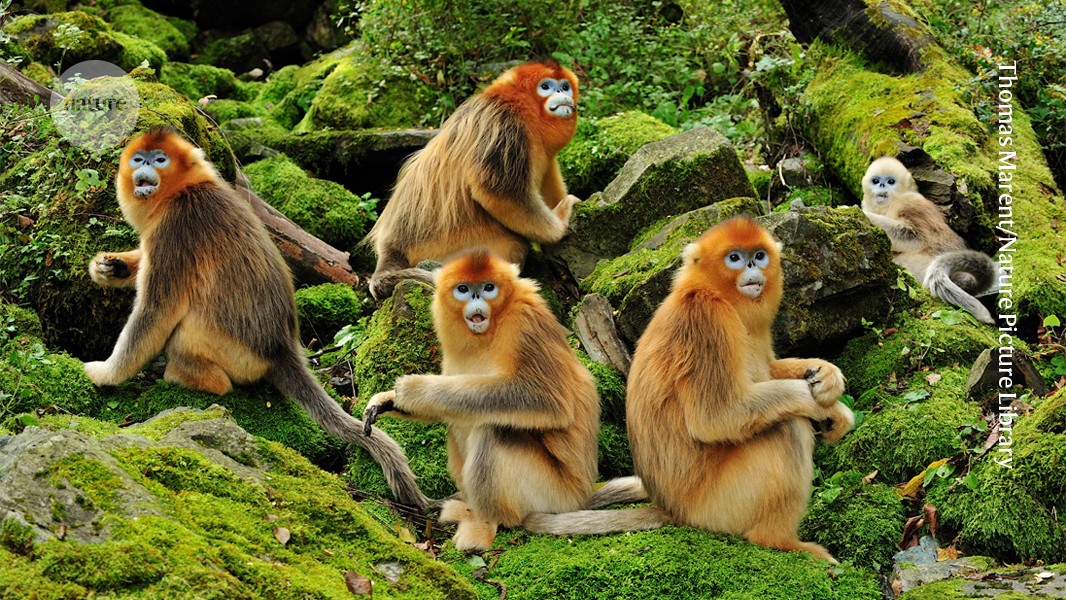
"Same-sex sexual behaviour is part of the normal social life of some primates and could play an important part in their long-term success, a survey of nearly 500 species of apes, monkeys and other non-human primates has found. The study, published on 12 January in Nature Ecology and Evolution, suggests that same-sex sexual behaviour in wild populations might be a response to harsh environments, predation and navigating complex social hierarchies. Observed behaviours included mounting, genital touching and fellatio."
""A lot of people have long regarded same-sex behaviour as an accident, or rare, or only in zoo animals," says co-author Vincent Savolainen, an evolutionary biologist at Imperial College London. But "it's part of the normal social life of primates". Although a staple of wildlife documentaries, same-sex sexual behaviour in animals has only begun to receive serious study in the past few years."
Same-sex sexual behaviour occurs across many non-human primates and can include mounting, genital touching and fellatio. Observations occurred in 59 of 491 surveyed species, with recurring behaviour in 23. Same-sex behaviour may respond to harsh environments, predation, and complex social hierarchies, and may strengthen social bonds and alliances. In rhesus macaques, male same-sex activity was routine and linked to later reproductive success, possibly via fortifying alliances. Explanations include accidental spillover when few dominate reproduction or adaptive functions, and serious study of such behaviours has increased only in recent years.
Read at Nature
Unable to calculate read time
Collection
[
|
...
]