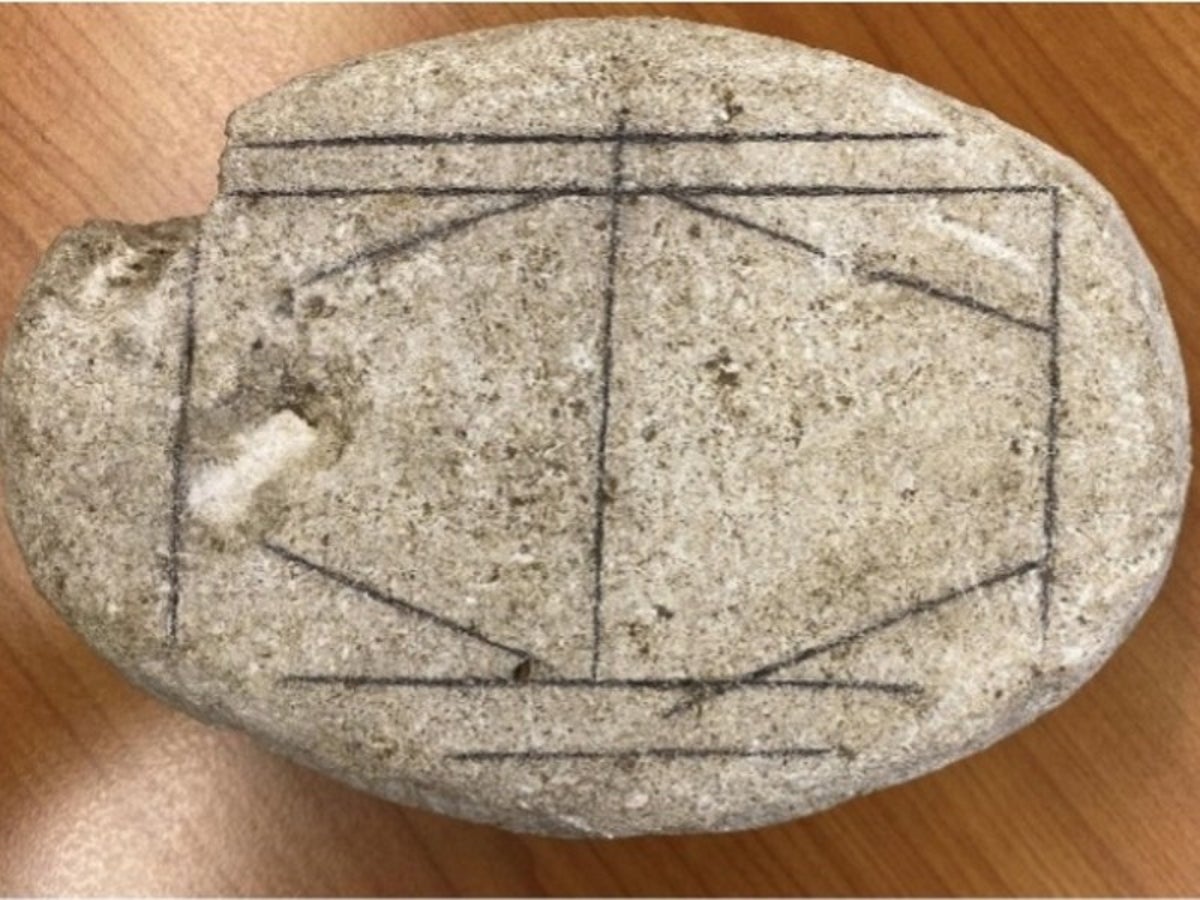
A late Roman limestone game board from Heerlen, Netherlands, features an oblong octagon etched within a rectangle and measures about eight inches across. The board was likely discovered around the late 1800s or early 1900s and was made from limestone imported from France. A combined analysis using traditional archaeological methods and artificial intelligence indicates the board served as a blocking game, in which one player attempts to prevent another's movement. The game was likely casual and undocumented historically. The find links Roman material culture in Coriovallum with recreational practices and shows AI can aid reconstruction of ancient games.
"It was the summer of 2020, and researcher Walter Crist was wandering around the exhibits inside a Dutch museum dedicated to the presence of the ancient Roman empire in the Netherlands. As a scientist who studies ancient board games, one exhibit stuck out to Crist: a stone game board dating to the late Roman Empire. It was about eight inches across and etched with angular lines that roughly formed the shape of an oblong octagon inside a rectangle."
"Crist contacted the museum curators to get a closer look. And now he and his colleagues believe they've decoded the game in a first-of-its-kind study using a combination of more traditional archaeological methods and artificial intelligence. According to the analysis, the object appears to be a sort of blocking game. In these types of games, one player tries to block another from moving; one example is tic-tac-toe."
Read at www.scientificamerican.com
Unable to calculate read time
Collection
[
|
...
]