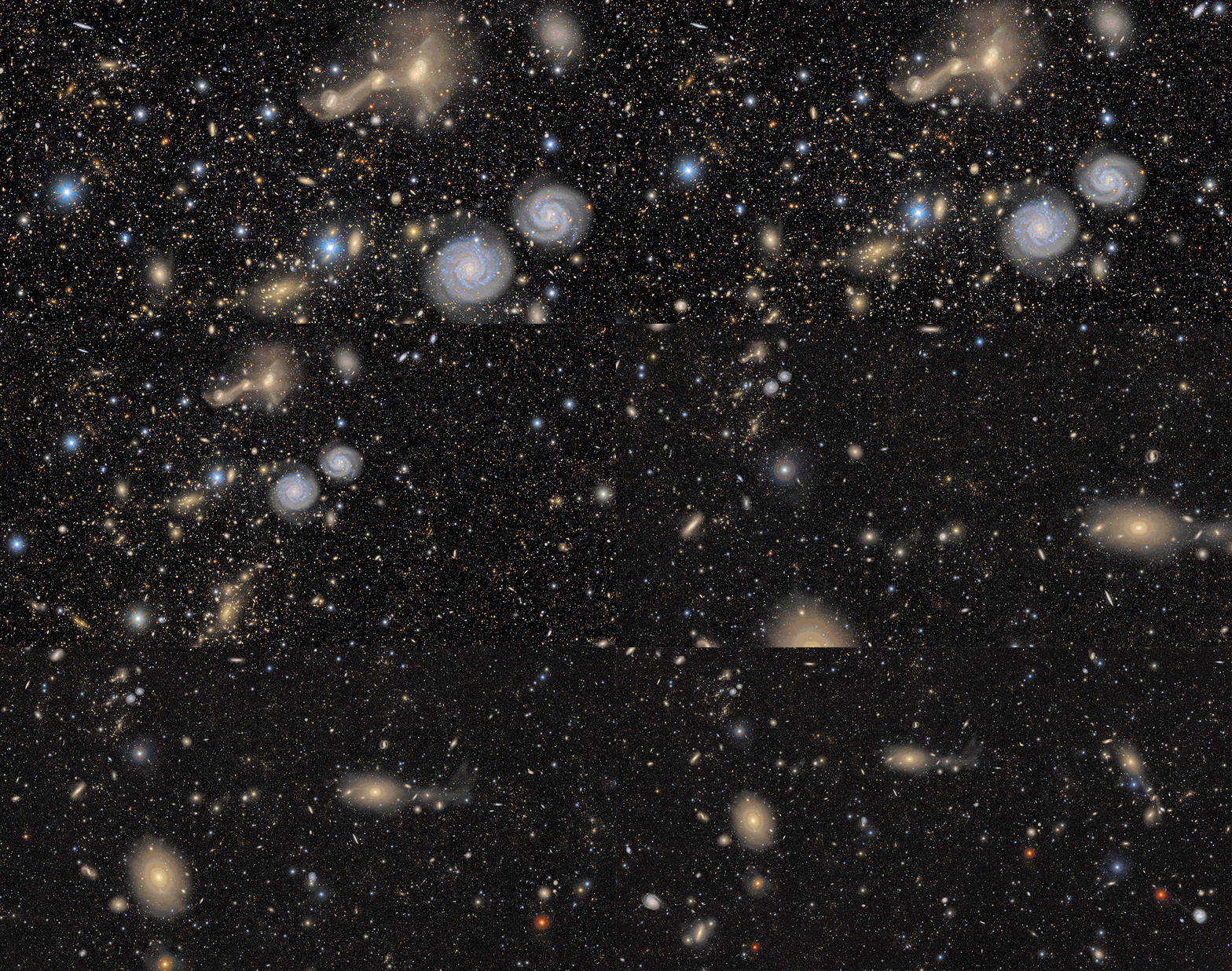
The Vera C. Rubin Observatory achieved a major milestone by activating its automated alert system on February 24, which processes data from the world's largest camera. The observatory captures approximately 1,000 enormous images nightly, generating an overwhelming volume of data impossible for individual astronomers to manually review. Scientists developed an automated comparison system that analyzes each new image against a detailed reference template of the entire sky, identifying all differences and changes. This system enables rapid detection of transient events, moving objects, and new celestial phenomena, allowing astronomers to focus on the most scientifically promising discoveries rather than manually sifting through thousands of images.
"We can detect everything that changes, moves and appears. It's way too much for one person to manually sift through and filter and monitor themselves. The system that would automatically alert them to the most promising activity in the overhead sky amid the 1,000 or so enormous images that Rubin's telescope captures every night."
"The data processing systems that support the observatory are starting to automatically compare every new Rubin image to the corresponding section of that background template. The systems identify all of the differences, each of which represents a potential astronomical discovery or event worthy of further investigation by the scientific community."
#vera-c-rubin-observatory #automated-alert-system #astronomical-data-processing #transient-detection #sky-survey-technology
Read at www.scientificamerican.com
Unable to calculate read time
Collection
[
|
...
]