"A long history of studies in human genetics has investigated how the powerful evolutionary pressure of endemic malaria has resulted in the selection of genetic variants that moderate the effect of the disease. In 1948, J. B. S. Haldane first suggested that heterozygous carriers of alleles that confer β-thalassaemia, a life-threatening anaemia at that time, could reduce mortality during malaria infection, and this 'heterozygote advantage' might explain the increased frequency"
"Broader genome-wide association studies (GWASs) have now identified additional DNA variants that are associated with the clinical severity of malaria7,8,9,10,11,12, some of which-such as variation in the ATP2B4 gene13-are also associated with features of red blood cells (RBCs), the cells that host key stages of the malaria parasite's life cycle in a human host. However, the mechanisms by which these variants and genes can both affect RBC parameters and ameliorate malaria remain mostly unknown."
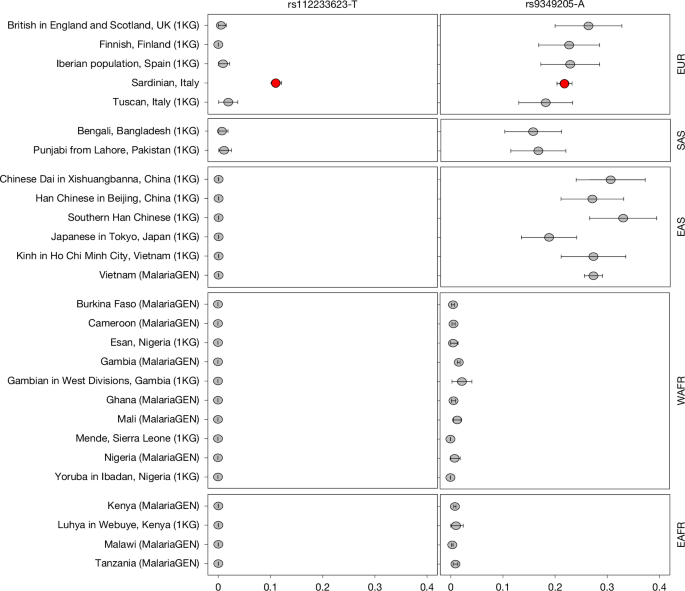
Endemic malaria has exerted strong evolutionary pressure that increased frequencies of multiple genetic variants offering partial protection, including β- and α-thalassaemia, sickle-cell anaemia (HbS), haemoglobin C and E, ovalocytosis, and G6PD deficiency. Genome-wide association studies have identified further DNA variants linked to malaria clinical severity, with some variants influencing red blood cell (RBC) features that affect parasite stages within RBCs. The molecular mechanisms by which many of these variants alter RBC parameters and reduce malaria severity remain largely unresolved. One specific allelic variant in the CCND3 gene region shows an association with increased haemoglobin A2 levels and altered RBC traits.
Read at Nature
Unable to calculate read time
Collection
[
|
...
]