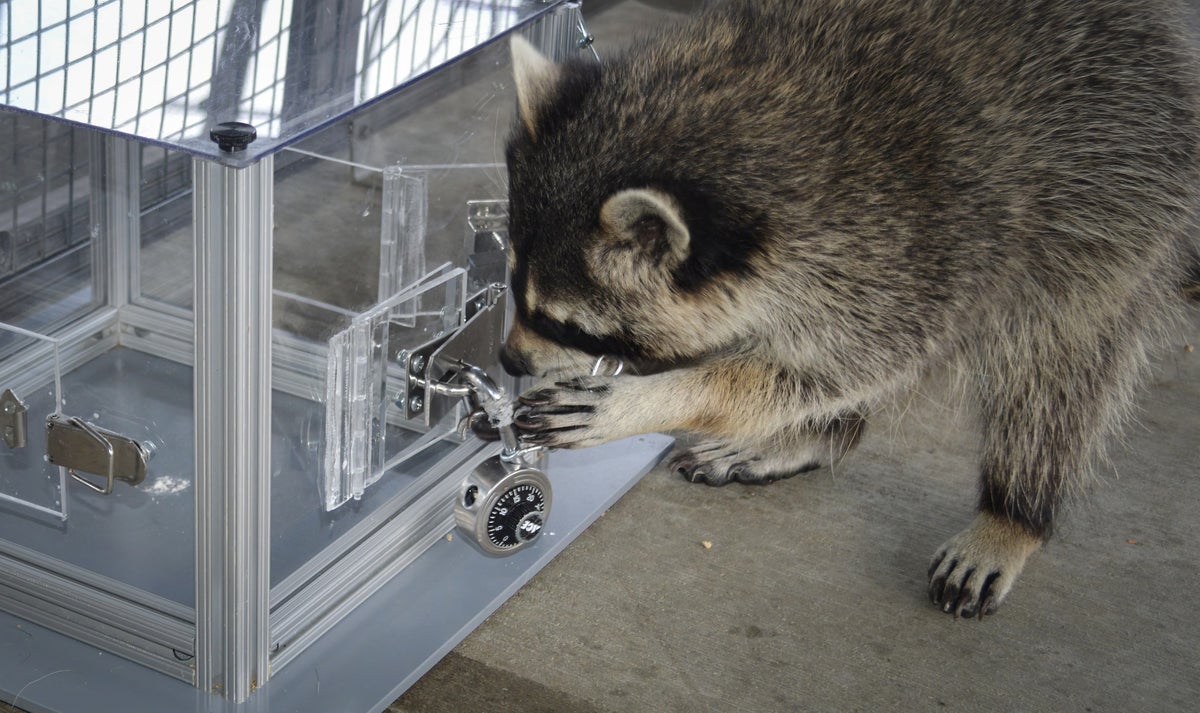
"Raccoons have very dense brains, and that likely explains their heightened ability to solve problems and to be behaviorally flexible, says Lauren Stanton, a cognitive ecologist at the University of California, Berkeley. But new research published in Animal Behaviour suggests raccoons will try to solve problems even when they don't expect a food reward for the work."
"The scientists describe the behavior as foraging for information, rather than food, in preparation for facing future challenges. On supporting science journalism If you're enjoying this article, consider supporting our award-winning journalism by subscribing. By purchasing a subscription you are helping to ensure the future of impactful stories about the discoveries and ideas shaping our world today."
"These meddlesome trash pandas have dexterous paws and considerable brain power that have helped them thrive in a human-dominated world—even showing early signs of domestication—constantly thwarting attempts to keep them from ransacking waste bins for tasty morsels."
Raccoons possess dense brains and dexterous paws that enable exceptional problem-solving abilities and behavioral flexibility, allowing them to successfully navigate human-dominated environments. Research published in Animal Behaviour reveals that raccoons engage in problem-solving behavior even without food rewards, a phenomenon researchers term "foraging for information." This behavior represents preparation for future challenges rather than immediate sustenance needs. Scientists studying raccoon cognition use multiaccess puzzle boxes with various locks and latches to test problem-solving capabilities. The research demonstrates that raccoons are motivated by intellectual challenge itself, similar to how humans engage with crossword puzzles or Sudoku, suggesting their cognitive drive extends beyond basic survival instincts.
#raccoon-cognition #problem-solving-behavior #animal-intelligence #information-foraging #behavioral-flexibility
Read at www.scientificamerican.com
Unable to calculate read time
Collection
[
|
...
]