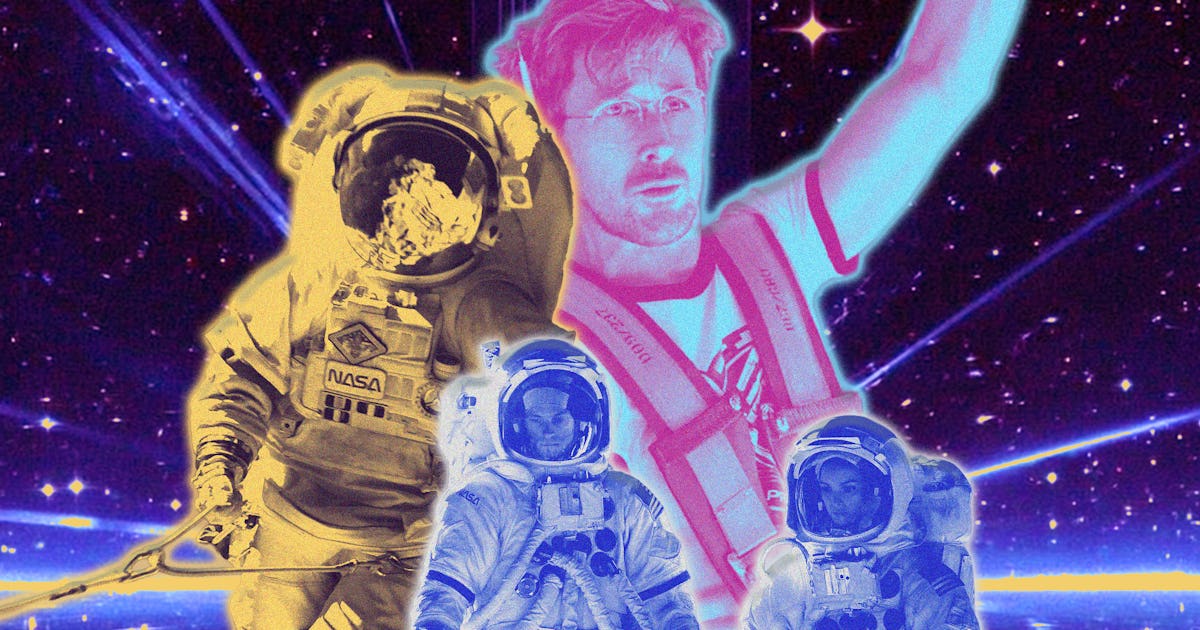
"Historically, pop sci-fi's role in real space advancements was that of an ideological cheerleader, and if fans wanted harder SF, they'd generally have to turn to the printed word. But since the twenty-teens, a science fiction paradigm shift has occurred, with bigger and more mainstream projects focusing on space storytelling that hews closer to real science."
"In the 1960s, Star Trek was also one of the first mainstream science fiction TV series that actively consulted with real scientists, including experts at the Rand Corporation and NASA. By the 1970s, the inspiration of boldly going where no one has gone before resulted in the first space shuttle being named Enterprise."
"It began in 2013, when Gravity made us dizzy and afraid of life on the ISS, and Europa Report gave a tiny Jupiter moon its big screen moment. Christopher Nolan's Interstellar had us thinking about flying near black holes in 2014, and The Expanse made us rethink mining all the rocks in the solar system shortly after."
Science fiction has historically inspired real-world space exploration, from NASA consulting with Star Trek creators to Nichelle Nichols recruiting astronauts. However, early 21st-century mainstream sci-fi prioritized entertainment over accuracy. Since the 2010s, a paradigm shift has occurred with major productions like Gravity, Interstellar, The Expanse, and The Martian incorporating genuine space science and research. These films and shows demonstrate closer alignment between fictional storytelling and real spaceflight principles, reversing the traditional one-way influence where sci-fi inspired space programs but rarely reflected their actual science.
#science-fiction-and-spaceflight #scientific-accuracy-in-media #space-exploration-inspiration #modern-sci-fi-paradigm-shift
Read at Inverse
Unable to calculate read time
Collection
[
|
...
]