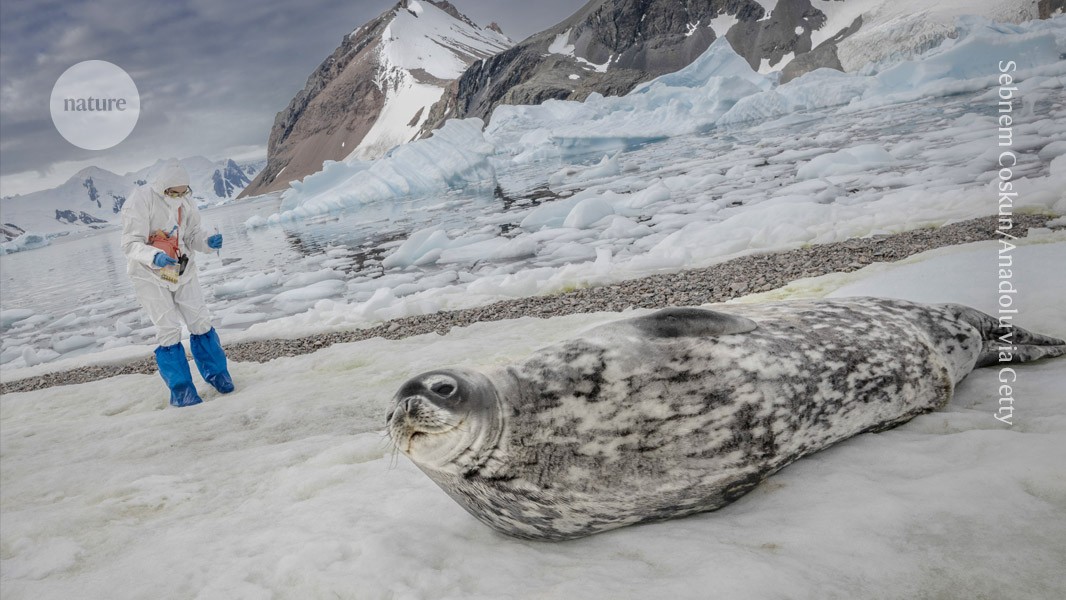
An analytical chemist collects faecal samples from Adélie penguins on Horseshoe Island, off the Antarctic Peninsula, at roughly 68° S to test for trace contaminants. The research targets heavy metals, pesticides and microplastics in wildlife samples. Protective measures include wearing a suit and following strict wildlife-protection rules while attempting to keep distance from animals. Some animals, such as Weddell seals, can be curious and hard to avoid. A university in Istanbul runs annual research trips to the site in coordination with the Turkish government and Marmara Research Center. The journey from Istanbul covers about 16,000 kilometres and takes around ten days.
"In this image, I'm collecting faecal samples from Adélie penguins ( Pygoscelis adeliae) on Horseshoe Island, off the Antarctic Peninsula at about 68° S. As an analytical chemist, my research focuses on detecting trace contaminants such as heavy metals, pesticides and microplastics. It's always been a dream of mine to travel to Antarctica, and I loved every minute. We follow strict rules to protect the wildlife, including wearing a protective suit."
"We also try to keep a distance from penguins and any other wildlife, such as the Weddell seal ( Leptonychotes weddellii) that I'm pictured with, but some animals are naturally curious and difficult to avoid. My university in Istanbul runs research trips to this site every year, coordinated by the Turkish government and Marmara Research Center in Gebze, Turkey. It's a long journey from Istanbul - around 16,000 kilometres and ten days of travel."
#adelie-penguins #antarctic-fieldwork #analytical-chemistry #contaminants-microplastics-pesticides-heavy-metals
Read at Nature
Unable to calculate read time
Collection
[
|
...
]