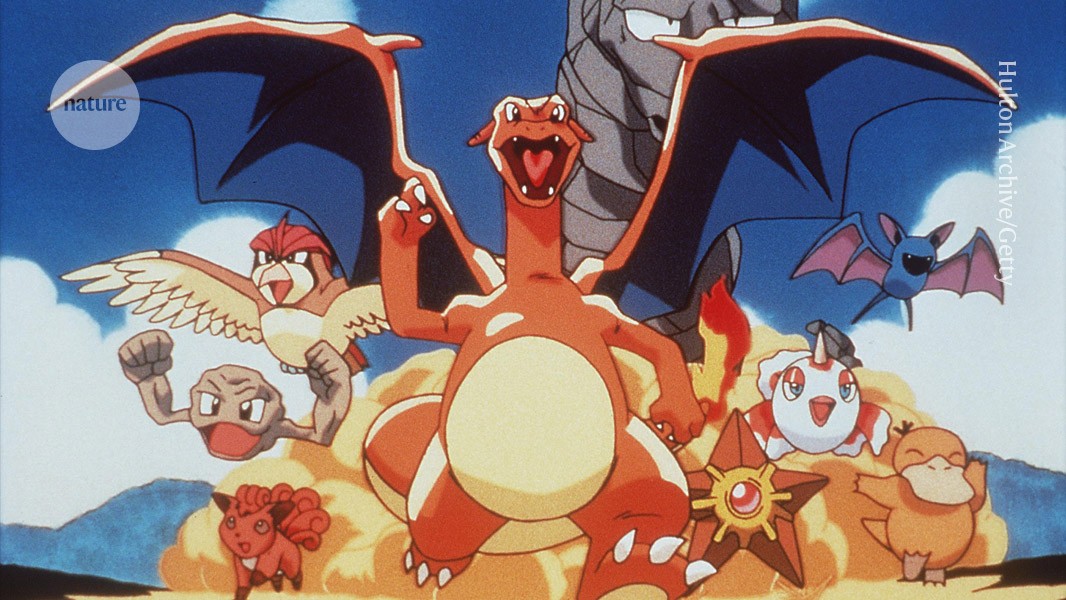
"It influenced my idea of what animals and natural history were, almost before I knew what real animals in the real world were like. For some researchers, themes in the Pokémon games mirror their everyday work. Spencer Monckton, a research scientist at the University of Guelph in Canada, who grew up playing the games and watching the TV series, says that collecting Pokémon is very much the same thing as what an entomologist does."
"The players also learn how to categorize the diverse fictional creatures according to their features and abilities. That's just classification. That is exactly what a taxonomist does. In 2013, while pursuing his master's degree, Monckton spent several months driving around Chile collecting bees. After analysing the shape and DNA of bees from the Heteroediscelis subgenus of Chilicola, he identified eight new species."
Pokémon, released in 1996 by Satoshi Tajiri, has evolved from a childhood passion for collecting insects into a global phenomenon with significant influence on scientific research and education. The franchise's themes of collecting, categorizing, and studying diverse creatures parallel fundamental scientific practices in ecology, taxonomy, evolution, and biodiversity research. Scientists worldwide credit Pokémon games, television series, and trading cards with shaping their understanding of natural history and inspiring their career paths. The collecting mechanics in Pokémon mirror entomological fieldwork, while the classification system teaches taxonomic principles. Researchers have applied these foundational concepts learned through gameplay to their professional work, including discovering new species and advancing scientific knowledge across multiple disciplines.
#pokemon-influence-on-science #taxonomy-and-classification #scientific-education #entomology-and-species-discovery #natural-history-research
Read at Nature
Unable to calculate read time
Collection
[
|
...
]