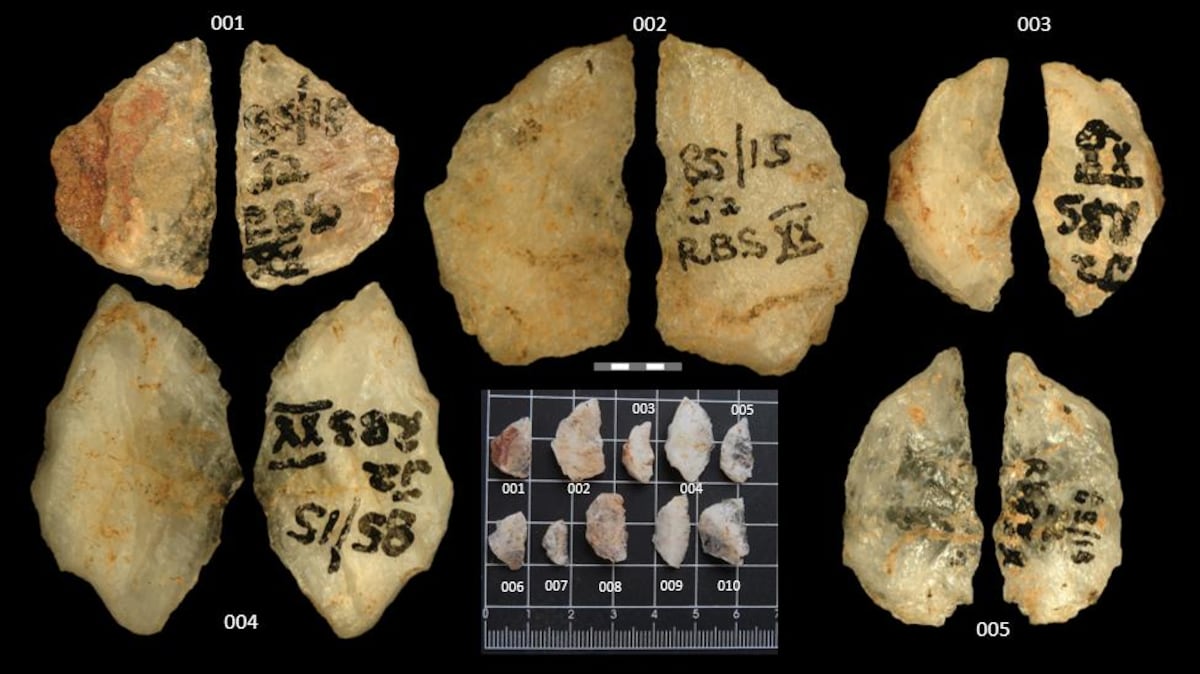
Chemical residue on tiny quartz microlith arrowheads from Umhlatuzana Rock Shelter in KwaZulu-Natal, South Africa, dates poisoned-arrow use to around 60,000 years ago. Ten microliths were recovered, and five contained two toxic plant alkaloids, buphandrin and epibuphanisine, derived from Boophone disticha (tumbleweed). Toxicological tests indicate small amounts of the plant can be lethal to rodents, and human symptoms can include nausea, muscle weakness, visual disturbances, respiratory paralysis, altered pulse, and coma. Earlier direct evidence of poison use dated to about 6,700–7,000 years ago in southern Africa. Tubes previously recovered suggest application technology and delayed-action hunting strategies.
"The use of poisoned hunting weapons is one of the most important innovations in the history of humans obtaining meat and has intrigued researchers for centuries. Until now, the oldest evidence came from bone arrowheads with traces of toxic glycosides found in Kruger Cave, South Africa, dating back to the mid-Holocene, about 6,700 years ago. However, a study published Wednesday in the journal Science Advances significantly extends that timeline."
"The team found 10 quartz microliths. Analysis revealed that five of them contained two toxic plant alkaloids: buphandrin and epibuphanisine. These substances are derived from Boophone disticha, or tumbleweed. Toxicological tests showed that even small amounts of this plant can be lethal to rodents. In humans, symptoms can include nausea, muscle weakness, visual disturbances, respiratory paralysis, altered pulse, and coma."
Read at english.elpais.com
Unable to calculate read time
Collection
[
|
...
]