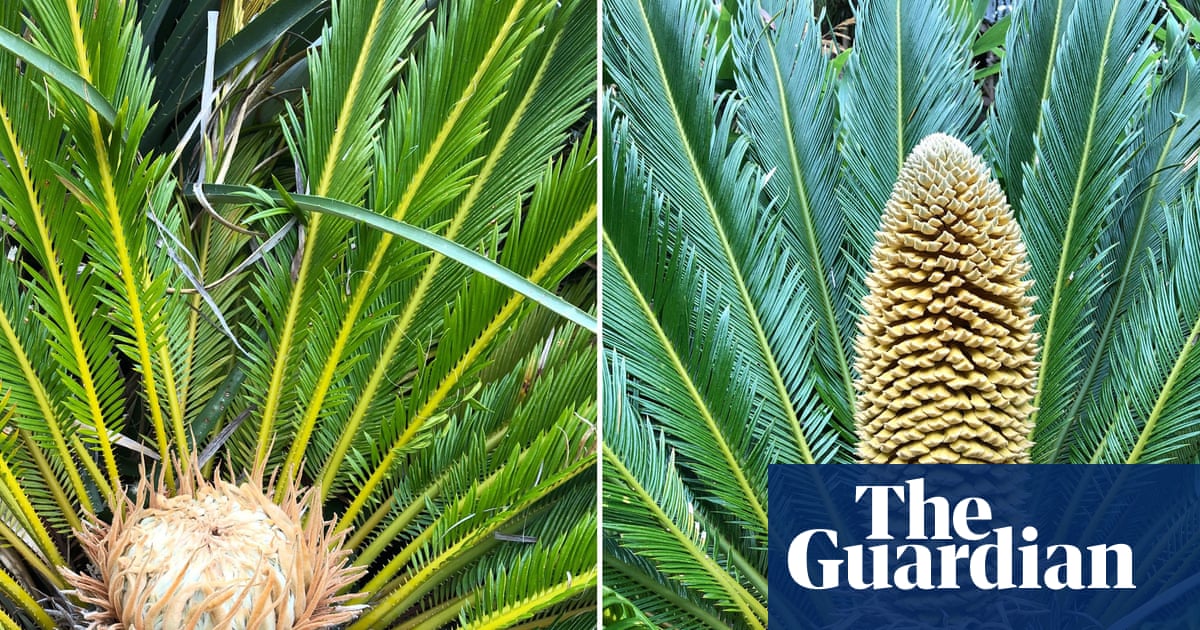
"Cycads are ancient palm-like plants that appeared 275m years ago, long before flowering plants evolved. They are also the oldest known seed plants pollinated by insects, but despite their ancient roots they have an ingenious knack of advertising themselves to beetles they heat up for sex, quite possibly the oldest signal in plants to attract pollinating insects. Cycads have separate male and female plants, with their sex organs held on cones."
"When the reproductive organs are ready for sex, they can warm up by more than 10C above their surroundings by cranking up their metabolism using a dense array of energy-producing mitochondria. Each cycad species also has its own exclusive species of pollinating beetle, which can detect its host cycad using special infrared sensors in their antennae, apparently tuned to the exact temperature range of the plant. Using these sensors, the heat-seeking beetles can find the cycad cones in the dark at night. And to ensure successful pollination, the male cones reach their peak temperature three hours before the female cones warm up, enticing the beetles to visit the males first to collect pollen before moving on to the female cones to fertilise them."
Cycads are palm-like seed plants that originated about 275 million years ago and predate flowering plants. They use metabolic heat to warm reproductive cones by more than 10°C via dense mitochondria. Male and female reproductive organs occur on separate cones. Each cycad species associates with a single, exclusive beetle pollinator. The beetles possess infrared sensors in their antennae tuned to the cycad cone temperature range and locate cones at night. Male cones peak in temperature about three hours before female cones, guiding beetles to collect pollen from males before visiting females to enable fertilisation.
Read at www.theguardian.com
Unable to calculate read time
Collection
[
|
...
]