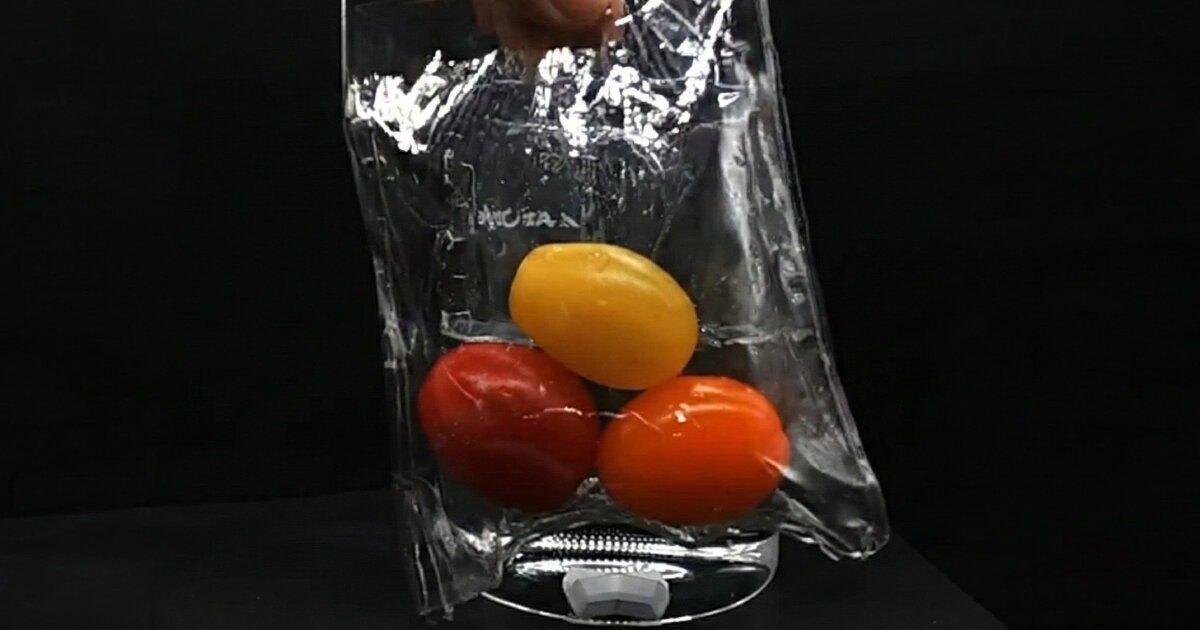
"For the current model, the team adopts carboxymethyl cellulose, a polymer that comes from wood pulp and is already approved for food and medical use. The challenge is to find a second component that can connect with it in a controlled way, and after testing different options, the researchers use a compound based on guanidinium ions, which carry a positive charge."
"The current study builds on the team's previous research, where they made a recyclable plastic that could melt in the salt water within hours. When the cellulose and guanidinium compound are mixed in water at room temperature, their opposite charges pull them together, and the same connections that hold the material together can also come apart in salt water, allowing the plant-based plastic to dissolve over time when it enters the ocean."
A plant-based plastic dissolves in salt water within hours without leaving residue. The material is based on carboxymethyl cellulose derived from wood pulp, a polymer already approved for food and medical use. A guanidinium-based compound with positive charges binds to the cellulose via opposite-charge interactions; those ionic connections break in salt water, enabling dissolution over time in the ocean. Choline chloride, a food-safe plasticizer, is added to tune mechanical properties; varying its ratio controls whether the material holds shape, stretches beyond its original length, or forms thin films. The formulation moves closer to manufacturable packaging options.
Read at designboom | architecture & design magazine
Unable to calculate read time
Collection
[
|
...
]