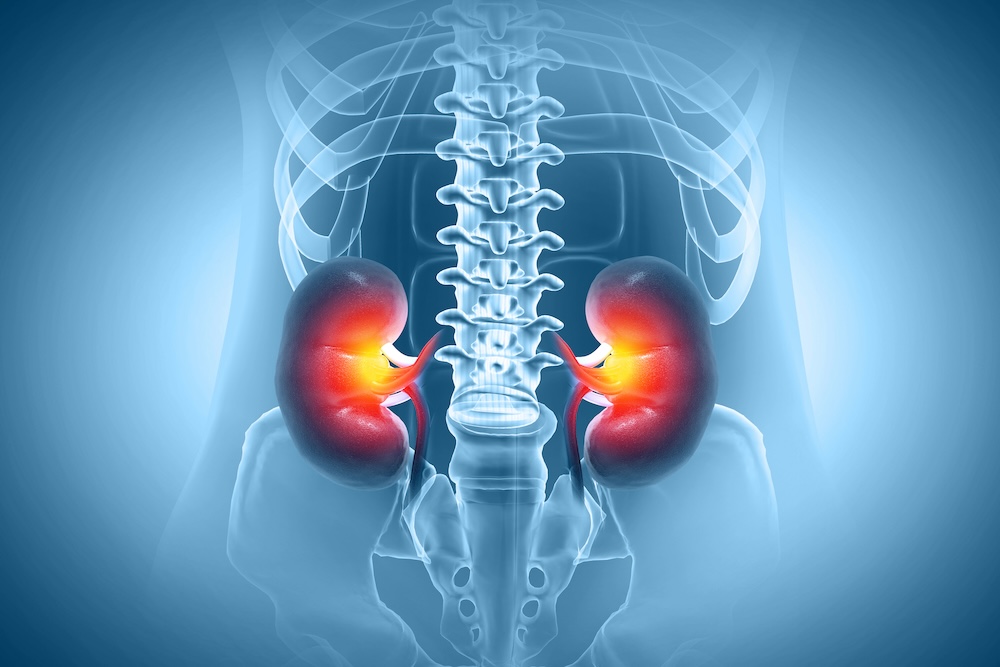
"Renin is an enzyme that is synthesized and secreted by the kidney to help control blood pressure and also works with angiotensin II and aldosterone hormones to maintain levels of sodium and potassium throughout the body. Renin production stems from juxtaglomerular granular (JG) cells in the kidney and plays a key role in the renin-angiotensin-aldosterone system (RAAS) which regulates blood pressure and volume status."
"Using a combination of techniques including in vivo calcium imaging to study mice and human kidney tissue samples, a group of scientists from several institutions led by Rose Hill, PhD, and Ardem Patapoutia, PhD, from Scripps Research Institute, found that the kidney uses a mechanical sensing mechanism through the PIEZO2 ion channel that allows JG cells to directly sense changes in blood flow and pressure. PIEZO2 is amechanically gated ion channel protein that allows cells across organ systems to sense physical forces, such as stretch and pressure."
PIEZO2 ion channels located in juxtaglomerular granular (JG) cells enable direct mechanical sensing of renal blood flow and pressure changes, triggering calcium signaling that regulates renin secretion. Renin controls blood pressure and sodium–potassium balance via the renin-angiotensin-aldosterone system (RAAS). Decreased renal blood flow activates PIEZO2-mediated mechanosensation, linking vascular forces to renin release. In vivo calcium imaging in mice and analysis of human kidney tissue show PIEZO2 expression and function in renin-producing cells. Clarifying this mechanotransduction pathway provides a mechanism connecting altered renal hemodynamics to dysregulated renin production and potential chronic kidney disease progression.
Read at News Center
Unable to calculate read time
Collection
[
|
...
]