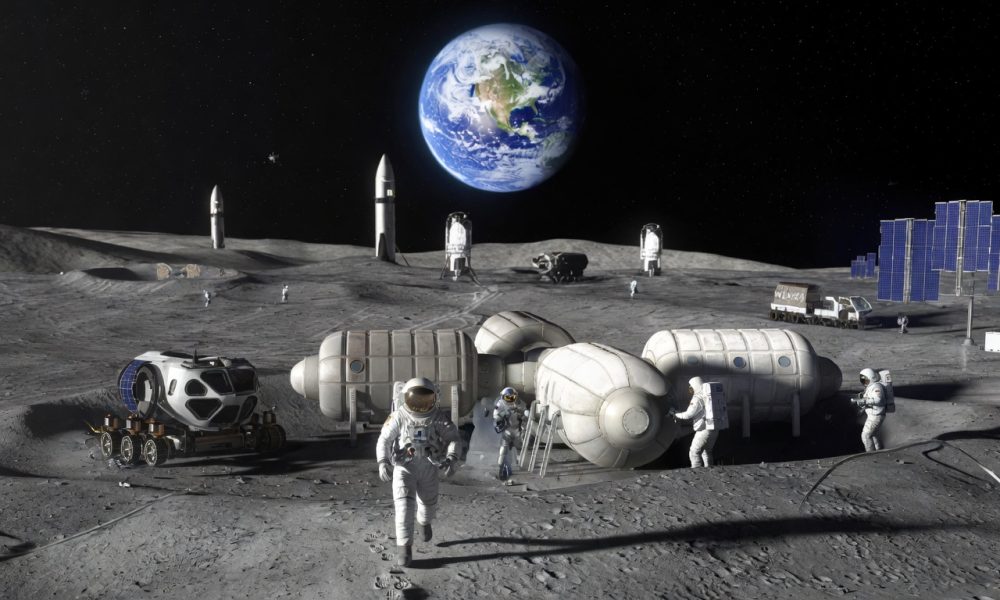
A permanent Moon base near the south pole is planned as a decade-long stepping stone toward Mars. The plan uses three phases with uncrewed and crewed missions to deliver landers, cargo, vehicles, and infrastructure. Early missions are targeted to launch before the end of 2026. Moon Base I will land scientific instruments at the Shackleton Connecting Ridge using Blue Origin’s Blue Moon Mark 1. Moon Base II will deliver over 1,100 pounds of cargo, including Astrolab’s FLIP rover, using Astrobotic’s Griffin lander. Moon Base III will study lunar swirls near the south pole using Intuitive Machines’ Nova-C Trinity lander with ESA and Korean payloads. NASA also funds Lunar Terrain Vehicles, including rovers from Astrolab and Lunar Outpost, with deployment targeted for 2028.
"“The Moon Base will be America's and humanity's first outpost on another celestial world,” NASA Administrator Jared Isaacman said, adding that every mission crewed and uncrewed “will be a learning opportunity as we return to the lunar surface, build the infrastructure to stay, and master the skills required to live and operate in one of the most demanding and dangerous environments imaginable.”"
"The plan is structured in three phases involving both uncrewed and crewed missions to deliver equipment, vehicles, and infrastructure to the surface, with the first three moon base missions targeted to launch before the end of 2026. Moon Base I, targeting fall 2026, will use Blue Origin's Blue Moon Mark 1 lander to deliver scientific instruments to the Shackleton Connecting Ridge, the same region where Artemis astronauts will land."
"Moon Base II will send Astrobotic's Griffin lander carrying more than 1,100 pounds of cargo including Astrolab's FLIP rover to begin developing mobility systems on the surface. Moon Base III will carry the Lunar Vertex science mission on Intuitive Machines' Nova-C Trinity lander to study lunar swirls near the south pole, with ESA and Korean science payloads aboard."
"On the rover side, NASA awarded Astrolab $219 million and Lunar Outpost $220 million to build the first phase of Lunar Terrain Vehicles, with both rovers targeted for deployment to the lunar surface by 2028. Astrolab's crewed rover weighs roughly 2,000 pounds and can reach over 6 mph. Lunar Outpost's Pegasus rover can operate autonomously or via remote control at over 9 mph."
Read at TESLARATI
Unable to calculate read time
Collection
[
|
...
]