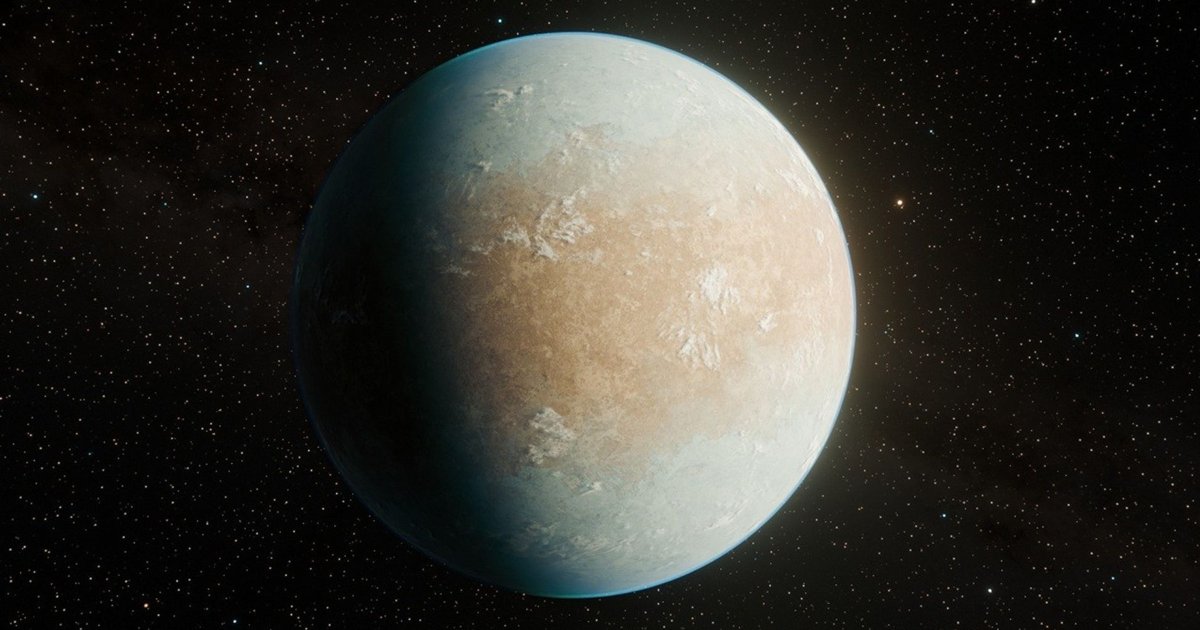
"Astronomers have discovered what appears to be an exoplanet that could be a distant Earthly paradise. Or it could be a frigid realm even chillier than Mars, incapable of supporting life. The margins are very fine when studying planets outside our solar system. But this new candidate planet, dubbed HD 137010 b, is an especially promising detection that hints at a habitable world that in many ways appears to mirror our own."
"The big and obvious difference between our star system and the candidate exoplanet's is the star itself. Our Sun is considered a G-type yellow dwarf, steadily burning at a moderate temperature for billions of years. But HD 137010 is a K-type orange dwarf, which is slightly smaller and cooler. That means the candidate exoplanet potentially receives less than a third of the light and heat that the Earth does, with estimated temperatures lower than minus 90 degrees Fahrenheit."
Astronomers detected a candidate exoplanet, HD 137010 b, that is nearly Earth-sized and orbits its star in about 355 Earth days. The object lies roughly 150 light-years away and was identified from a single transit recorded by the Kepler telescope in 2017, which provided enough signal to estimate its size and orbital period. The host star is a K-type orange dwarf, slightly smaller and cooler than the Sun, so the planet likely receives under a third of Earth's light and heat. Estimated surface temperatures fall below minus 90 degrees Fahrenheit, colder than Mars, leaving conditions for life uncertain.
Read at Futurism
Unable to calculate read time
Collection
[
|
...
]