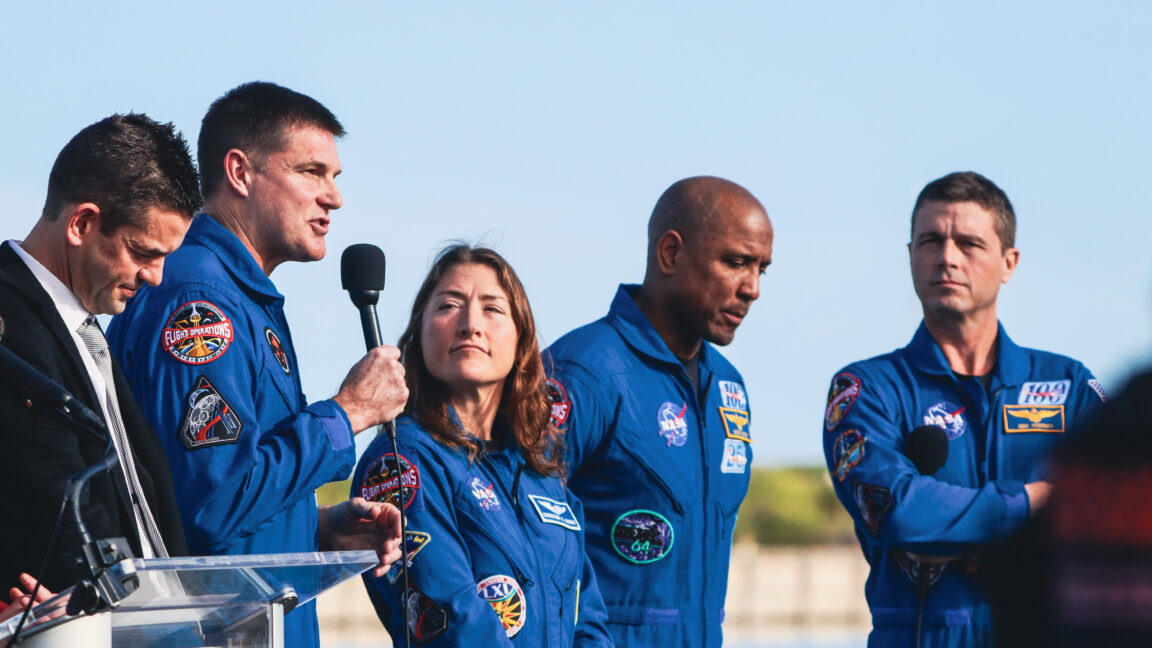
"Artemis II will travel more than 1,000 times farther from Earth than the ISS, departing on a trajectory taking the mission several thousand miles beyond the far side of the Moon. The mission will last nine days from liftoff in Florida to splashdown in the Pacific Ocean. The four-person crew will ride a rocket and spacecraft-the Space Launch System and Orion-that have flown together just once before."
"With just a single data point from flight testing-the unpiloted Artemis I demo mission in 2022-NASA managers were reluctant to publicize the bottom-line number from the probabilistic risk assessment for Artemis II. The sheer novelty of the mission makes it difficult to quantify the risk, NASA officials said Thursday."
"I think sometimes we get tricked into believing that those numbers are somehow really telling us something critically important. I think they're valuable. I think we can do things in a relative comparison, but I'm not sure that we should be hanging our hat on a single number."
Artemis II represents a significant departure from established spaceflight operations, traveling over 1,000 times farther than the International Space Station to venture several thousand miles beyond the Moon's far side. The nine-day mission will carry four astronauts aboard the Space Launch System and Orion spacecraft, which have flown together only once before during the unpiloted Artemis I demonstration in 2022. NASA officials acknowledged difficulty in quantifying mission risks due to limited flight-testing data. The agency completed a probabilistic risk assessment but expressed skepticism about the usefulness of assigning specific numerical risk values, suggesting such metrics may provide false confidence rather than meaningful safety insights.
Read at Ars Technica
Unable to calculate read time
Collection
[
|
...
]