"“We are stealing the entire technology that has evolved over millions of years in plants and are able to transplant it into the animal system,” says David Tai Leong, a biologist at the National University of Singapore and co-author of the study."
"“Any effort to do this is necessarily going to look like a party trick at first,” Allard adds. But only by trying the technique and finding out its limitations - such as how long the effects last and which cells can be targeted - can researchers work to build out the use cases, he adds."
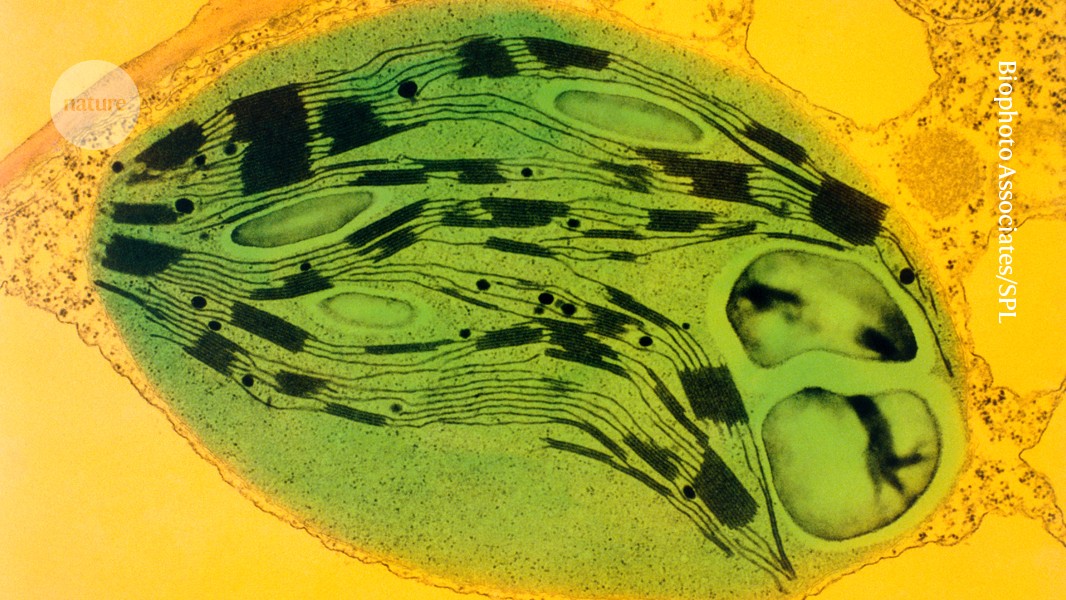
"To see whether mammalian cells might be able to pull off a similar feat, Xing first headed to the local supermarket, FairPrice, to buy a range of leafy greens. By blending, filtering and centrifuging these, he isolated the leaves' chloroplasts, the photosynthetic engines that transform light into energy. He then dunked the chloroplasts into a solution to expose their thylakoid grana, pancake-like stacks that harvest light to power the photosynthetic reactions."
"Spinach ( Spinacia oleraceae) yielded more photosynthetic machinery than did red spinach ( Amaranthus tricolor), water spinach ( Ipomoea aquatica) or lettuce ( Lactuca sativa). The team encapsulated the spinach grana into nanoparticles, which they dubbed LEAFs."
Chloroplast photosynthetic machinery isolated from spinach can be encapsulated into nanoparticles and introduced into mouse eyes. The transplanted machinery converts light into molecules that carry energy. These energy-carrying molecules can influence biological processes in the eye. The approach enables cross-kingdom organelle swapping between plants and animals. Initial results are described as limited and exploratory, with key unknowns including how long the effects last and which cell types can be targeted. The work is motivated by observations that sea slugs can acquire photosynthetic machinery from algae. Spinach provides more photosynthetic machinery than several other leafy greens tested.
Read at Nature
Unable to calculate read time
Collection
[
|
...
]