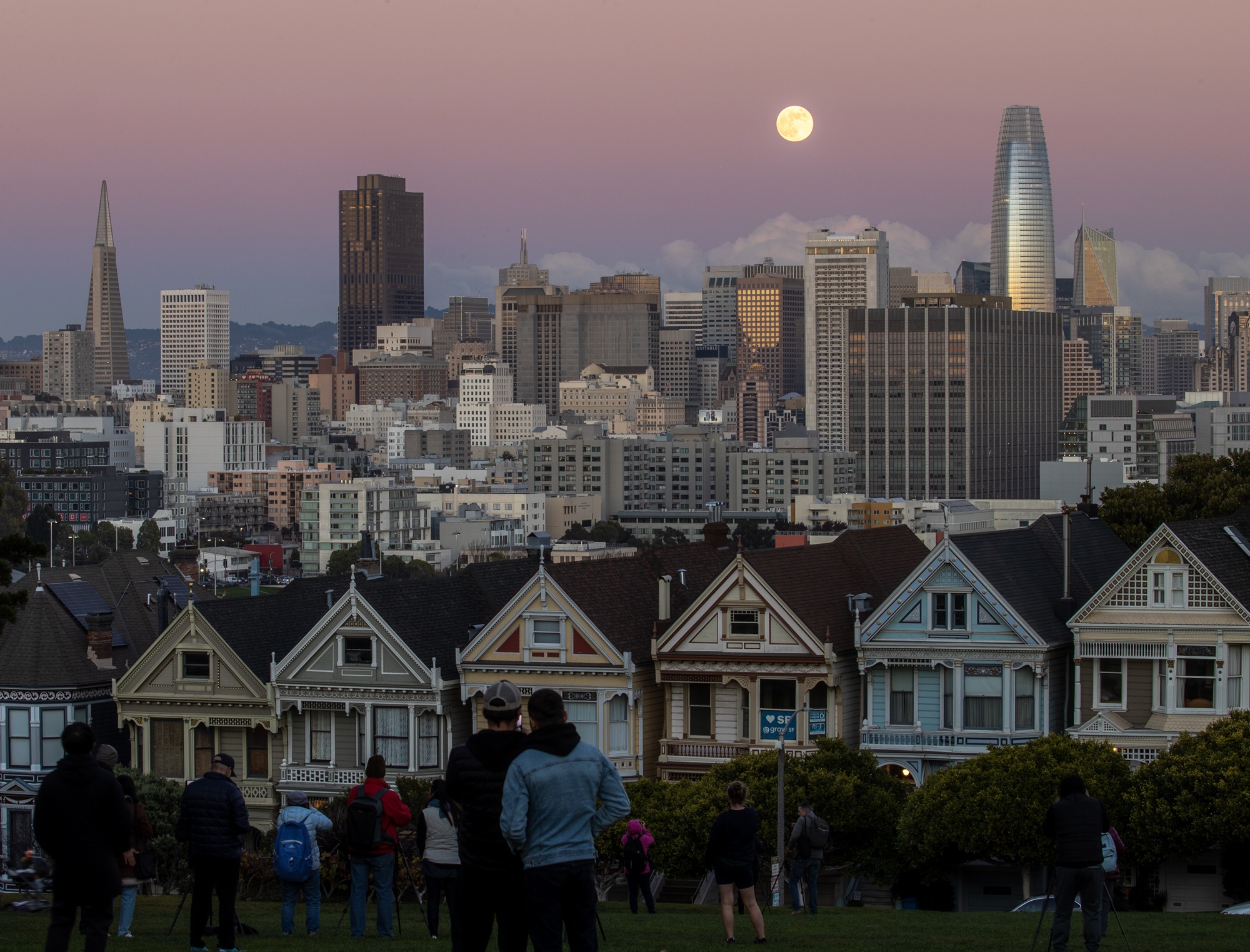
""That's a very misleading term," said Andrew Fraknoi, astronomer and professor at the University of San Francisco's Fromm Institute - one of the astronomers who rolls their eyes at this particular label. This is because the average stargazer "cannot tell the difference between full moons that are regular or super: a complaint people sometimes have about cheap burger places, too," Fraknoi said."
"When to see: Dec. 13-14 The Geminids meteor shower is considered one of the most reliable meteor displays of the year - and sometimes, it's the most spectacular, too. This winter, conditions are nearly perfect to view the Geminids, since the shower peaks overnight around midnight on Dec. 13 and 14, but the moon won't rise until around 2 a.m., according to the American Meteor Society. That means the skies will be wonderfully dark during the evening and just past midnight."
Thursday Dec. 4 features a full "Cold Moon" near perigee, making the Moon appear slightly larger and brighter. The label "supermoon" is contested, and some astronomers argue average stargazers cannot tell the difference between regular and "super" full moons. The Geminids meteor shower peaks overnight Dec. 13–14 with favorable conditions because the Moon rises around 2 a.m., leaving dark skies near midnight. The Geminids originate from asteroid-like 3200 Phaethon and often produce bright, colorful meteors. The peak falls on a weekend, enabling easier family viewing. The Quadrantids on Jan. 3–4 may be largely washed out by a full moon.
Read at Kqed
Unable to calculate read time
Collection
[
|
...
]