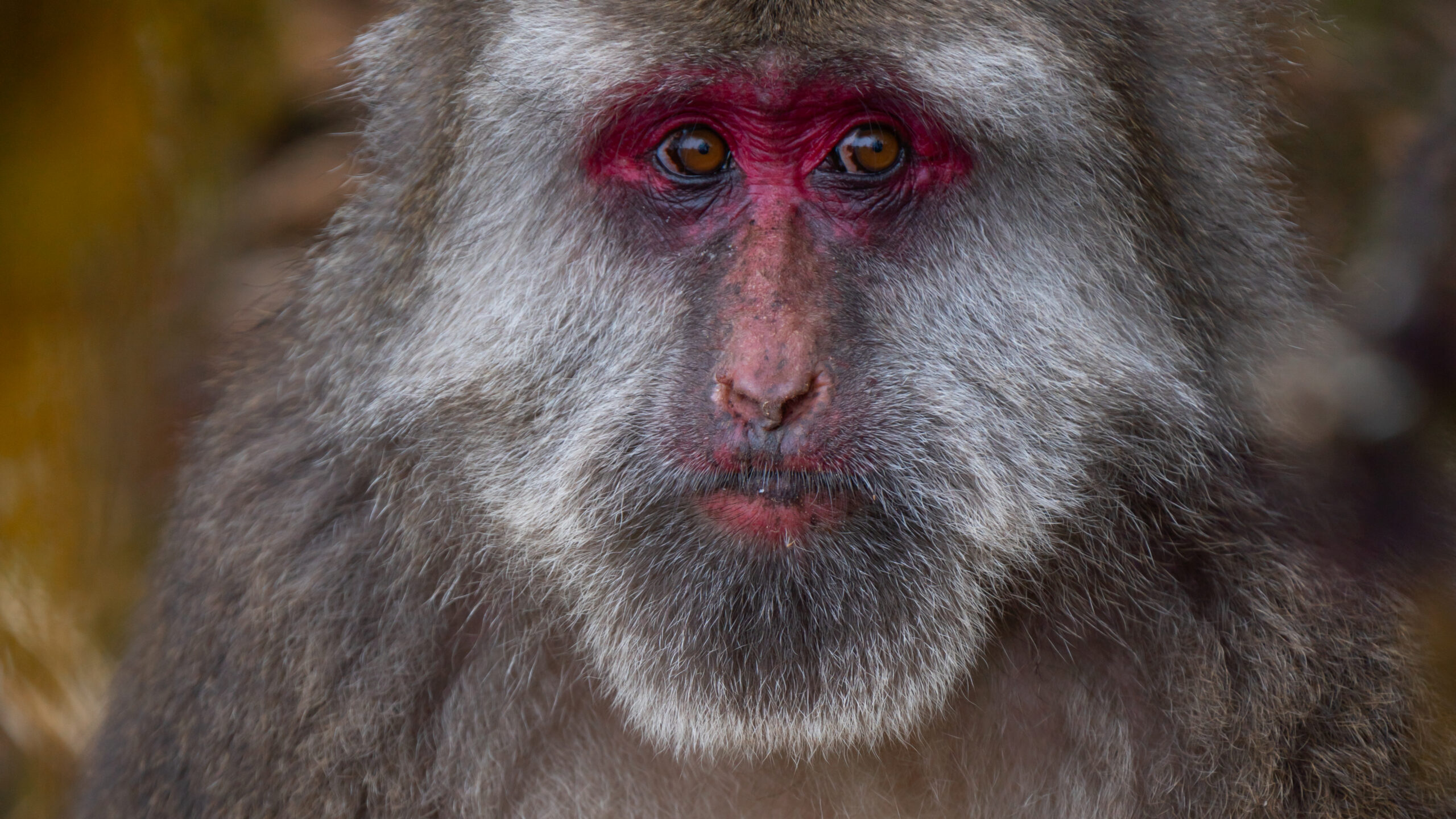
Three macaque facial gestures were identified: lipsmack for receptivity or submission, threat face for challenging or chasing an adversary, and chewing as a non-social volitional movement. fMRI scans localized key cortical areas tied to these gestures: primary motor cortex, ventral premotor cortex, primary somatosensory cortex, and cingulate motor cortex. Micro-electrode arrays were implanted with sub-millimeter precision to record many neurons simultaneously across these regions. All four areas were active across social and non-social gestures, indicating coordinated activity rather than strict regional specialization. Distinctions between gesture types emerged from different temporal neural codes and a temporal hierarchy revealed by population dynamics analysis.
"Based on the video analysis, scientists identified three facial gestures they wanted to focus on: the lipsmack macaques use to signal receptivity or submission; the threat face they make when they want to challenge or chase off an adversary; and chewing, a non-social, volitional movement. Then, using the fMRI scans, the team located key brain areas involved in triggering these gestures. And when this was done, Ianni and her colleagues went deeper-quite literally."
""We targeted these brain areas with sub-millimeter precision for implantation of micro-electrode arrays," Ianni explains. This, for the first time, allowed her team to simultaneously record the activity from many neurons spaced across the areas where the brain generates facial gestures. The electrodes went into the primary motor cortex, the ventral premotor cortex, the primary somatosensory cortex, and the cingulate motor cortex."
"The researchers expected to see a clear division of responsibilities, one where the cingulate cortex governs social signals, while the motor cortex is specialized in chewing. Instead, they found that every single region was involved in every type of gesture. Whether the macaques were threatening a rival or simply enjoying a snack, all four brain areas were firing in a coordinated symphony."
Read at Ars Technica
Unable to calculate read time
Collection
[
|
...
]