"Human stem cell-derived organoids have become a major focus of biomedical research because they enable patient-specific studies of how tissues respond to drugs and emerging therapies. Labs in academia and industry have developed these tissue constructs over the years, and the National Institutes of Health (NIH) has initiated funding streams to accelerate work in this direction."
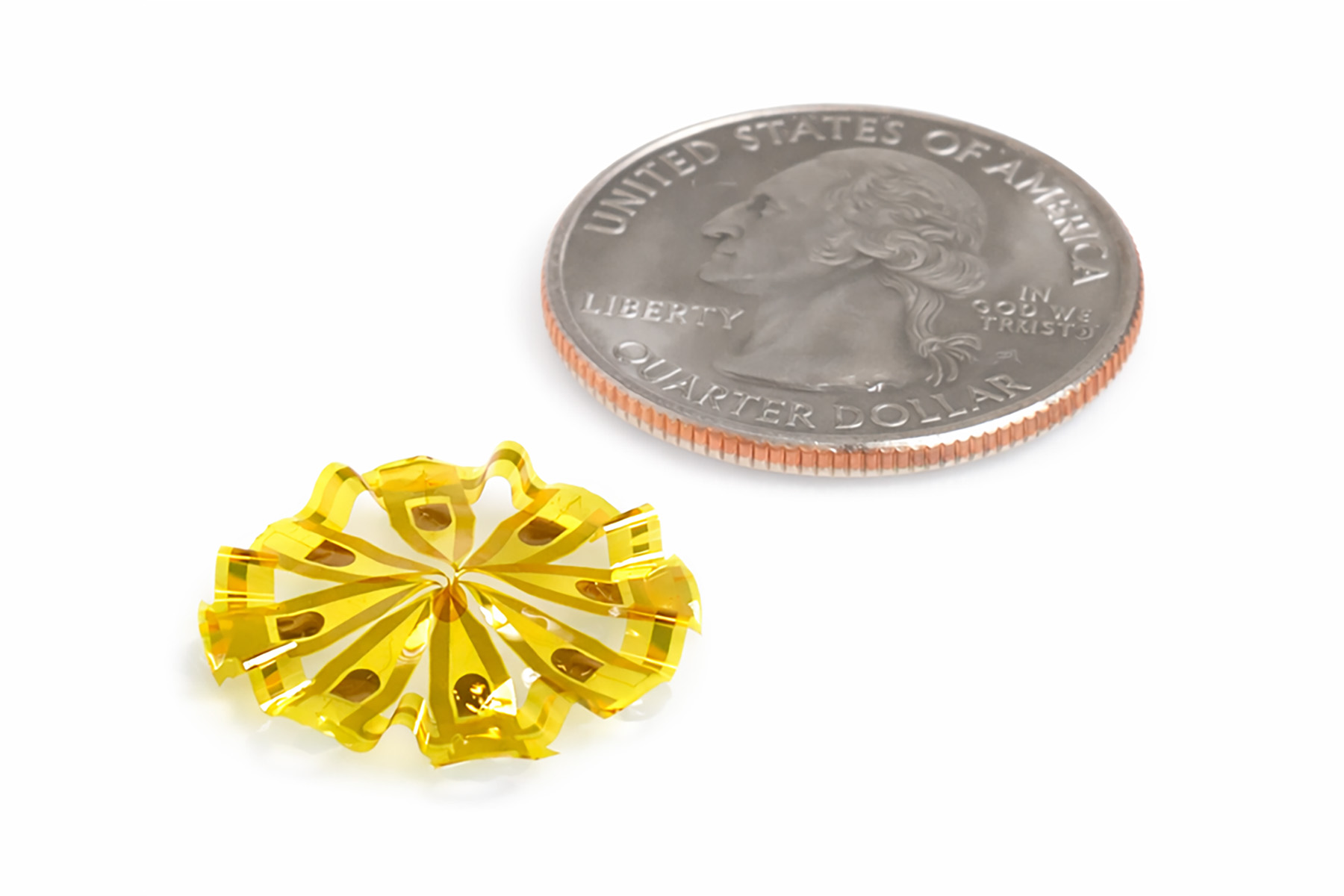
"The soft, three-dimensional (3D) electronic framework wraps around an organoid like a breathable, high-tech mesh. Rather than sampling select regions, it delivers near-complete, shape-conforming coverage with hundreds of miniaturized electrodes. That dense, three-dimensional interfacing enables scientists to map and manipulate neural activity across almost the entire organoid."
"By moving from localized probing to true whole-network mapping, the work brings organoid research closer to capturing how real human brains develop, function and even fail."
Researchers at Northwestern University and Shirley Ryan AbilityLab created a breakthrough technology for studying human neural organoids, millimeter-sized lab-grown brain-like tissues used to model brain development and disease. Previously, scientists could only record from small neuron populations, missing network-wide dynamics. The new soft, three-dimensional electronic framework wraps around organoids like breathable mesh, featuring hundreds of miniaturized electrodes that provide near-complete coverage. This dense interfacing enables comprehensive mapping and manipulation of neural activity across almost entire organoids, moving beyond localized probing to whole-network analysis. The advancement brings organoid research closer to understanding how real human brains develop, function, and fail, supporting patient-specific drug response studies and emerging therapeutic development.
#neural-organoids #bioelectronics #brain-mapping-technology #neural-activity-recording #tissue-engineering
Read at News Center
Unable to calculate read time
Collection
[
|
...
]