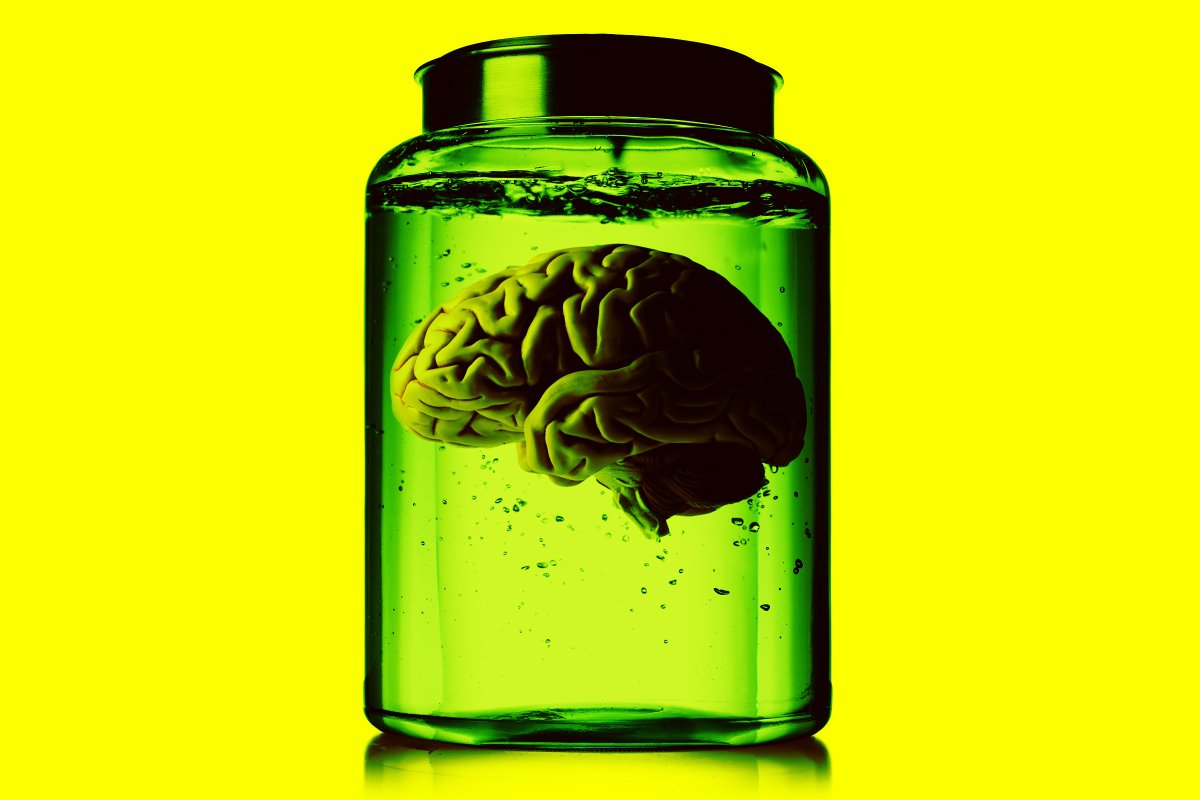
Scientists have progressively developed the ability to grow functional brain tissue in laboratories, beginning with Henry Van Peters Wilson's 1907 discovery that sponge cells can self-organize into living structures. This led to the isolation of pluripotent stem cells in the 1980s-1990s, which can differentiate into any cell type. In 2013, researchers created the first brain organoid—a three-dimensional miniature brain containing real neurons. These lab-grown brains enable study of brain development, disease modeling, and drug testing. Recently, UC Santa Cruz scientists demonstrated that brain organoids can process information in real time by solving the cart-pole problem, an engineering benchmark measuring information processing effectiveness. This breakthrough, published in Cell Reports, represents a significant leap in understanding cognitive function and neural computation.
"Lab-grown brains finally came onto the scene in 2013, when a team of scientists led by Madeline Lancaster created the first brain "organoid": a tiny, three-dimensional cell culture mimicking the human brain. These mini-brains, made out of stem cells, contain real neurons, thus allowing researchers to study brain development, model neurological diseases, and test drugs before human trials."
"In a remarkable breakthrough published in the journal Cell Reports, researchers were able to effectively coach lab-grown brains into solving the "cart-pole" problem. The cart-pole problem is an engineering benchmark used in robotics, artificial intelligence - and now cognitive science - to measure how effective systems are at processing information."
"Their subsequent discoveries led to the isolation of pluripotent stem cells - "master cells" that can divide endlessly and become any type of cell in the body - first from mouse embryos in 1981, then from human embryos in 1998."
Read at Futurism
Unable to calculate read time
Collection
[
|
...
]