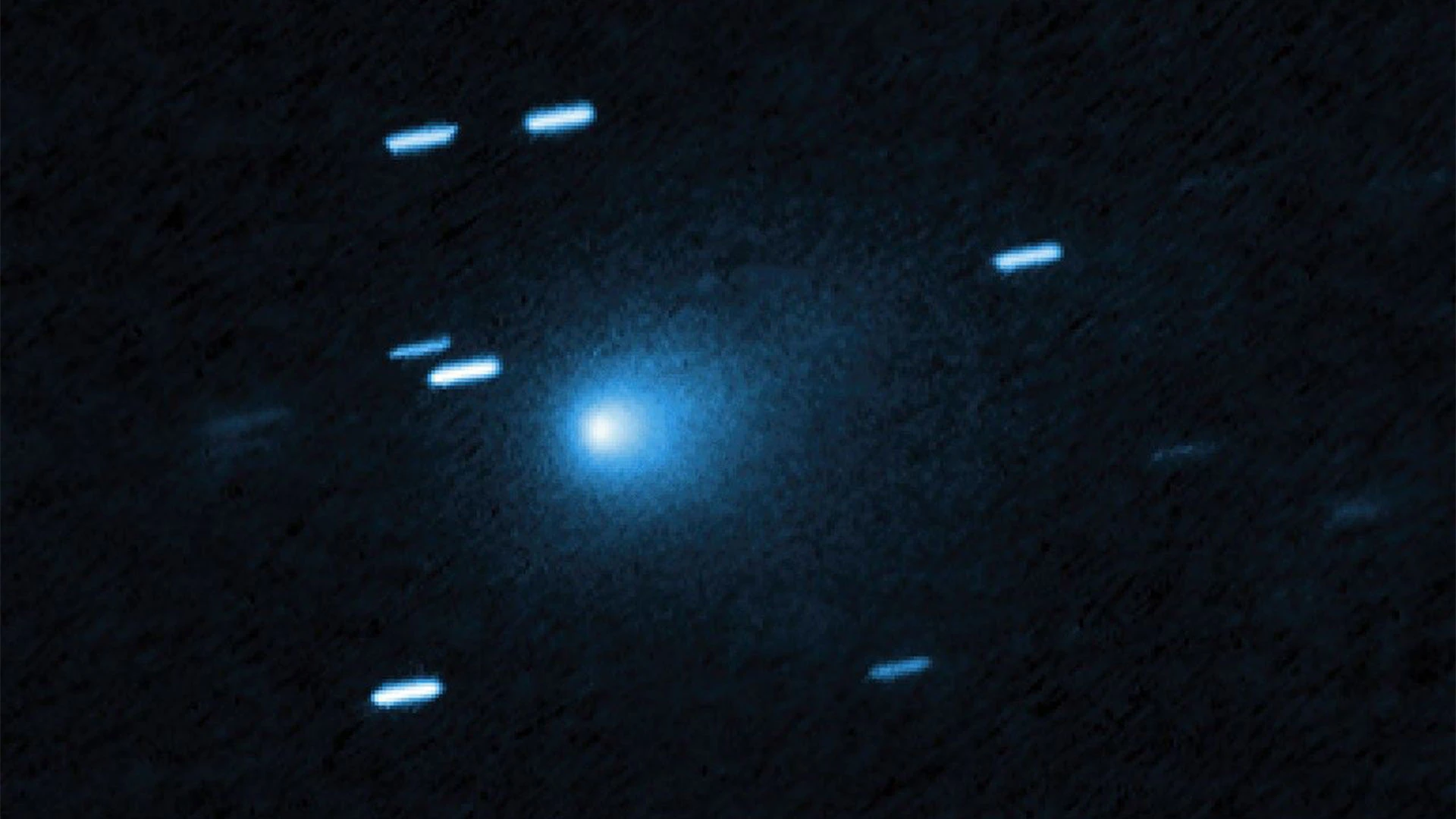
Interstellar comet 3I/ATLAS originates from outside the Solar System and is not gravitationally bound to the Sun, following an elliptical trajectory through the galaxy. Observers first detected it on July 1, 2025, via the Asteroid Terrestrial-impact Last Alert System survey telescope in Rio Hurtado, Chile, with pre-discovery images traced to June 14, 2025. The name reflects the discovering system, and the designation indicates it is the third known interstellar object. On December 19 the comet will make its closest approach to Earth, passing about 167 million miles away—roughly twice the Earth–Sun distance—and poses no threat to Earth.
"Much like a Christmas tree, planets in our Solar System revolve around our star, the sun. It's not the only planetary system out there. Our galaxy, the Milky Way, contains other systems, and if you zoom out even further, there are even more. The comet 3I/ATLAS is labeled interstellar because it comes from outside our star system and is not gravitationally bound to the sun. It's on an elliptical vacation of sorts, exploring new locations with a greater freedom than the other objects surrounding it."
"Scientists only recently discovered 3I/ATLAS, on July 1, 2025. The Asteroid Terrestrial-impact Last Alert System survey telescope, funded by NASA and located in Rio Hurtado, Chile, first laid eyes on the object. This observation caused scientists to go back and look over records from other Atlas telescopes to learn more. These pre-discovery findings found evidence of the comet dating back to June 14, 2025."
"On Friday, 3I/ATLAS will get the closest to Earth in its orbit, but close is a relative term. It will cross within 167 million miles of our planet. To put that in perspective, that is around two times the distance between the Earth and the Sun. The comet poses no danger to Earth, meaning there's no need to hire a ragtag group of oil drillers à la the 1998 film Armageddon."
Read at Fast Company
Unable to calculate read time
Collection
[
|
...
]