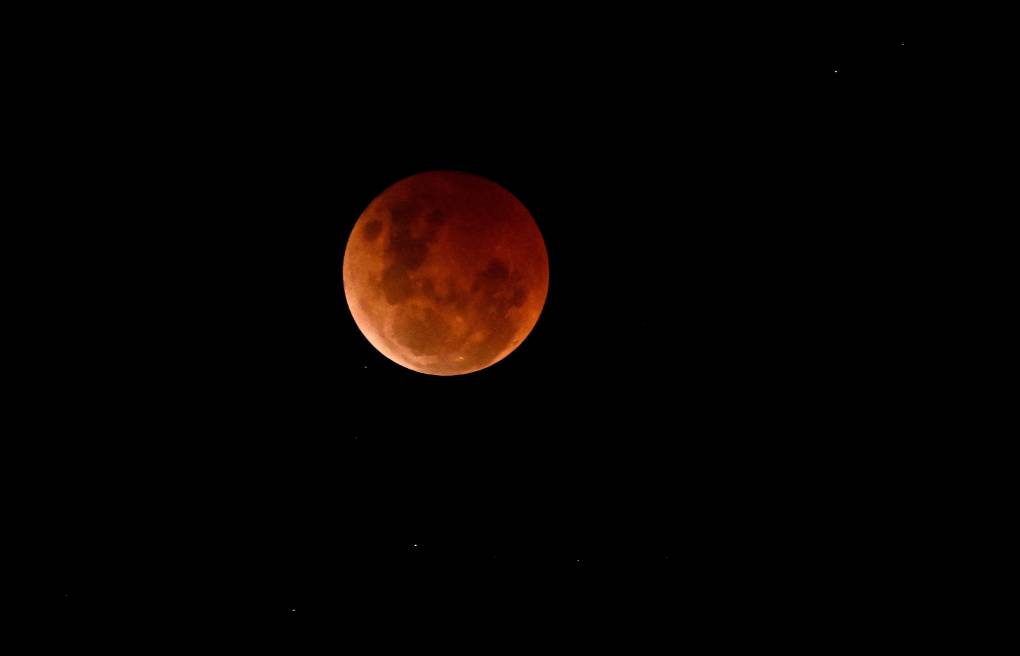
"Total eclipses of the moon are very democratic, easy to spot, perfectly safe to look at, and not requiring any special equipment to see. A lunar eclipse is visible to anyone on the night side of Earth. In contrast, total solar eclipses are only visible along a narrow path of totality - sometimes just a few hundred miles wide."
"As the moon moves slowly through the Earth's shadow, we first see only part of the moon darkening. But then, as the moon moves fully into the Earth's shadow, we see its entire disk of the moon become dark and reddish. The best blood moon views occur between 3:04 a.m. and 4 a.m."
"During totality, the moon glows red because of Rayleigh scattering: the same phenomenon that makes sunsets appear orange and red. As sunlight passes through Earth's atmosphere, it filters out blue light and bends red light toward the moon, giving it that signature blood color."
Total lunar eclipses are accessible astronomical events visible to anyone on Earth's night side without special equipment, unlike solar eclipses which are only visible along narrow paths. The upcoming total lunar eclipse begins at 1:50 a.m. PST on March 3, with totality occurring at 3:04 a.m. and maximum eclipse at 3:33 a.m., lasting approximately 30 minutes. The moon appears red during totality because of Rayleigh scattering, the same phenomenon creating red sunsets. As sunlight passes through Earth's atmosphere, blue light filters out while red light bends toward the moon, creating the distinctive blood moon color. The exact shade depends on atmospheric conditions including dust, pollution, and volcanic activity.
Read at Kqed
Unable to calculate read time
Collection
[
|
...
]