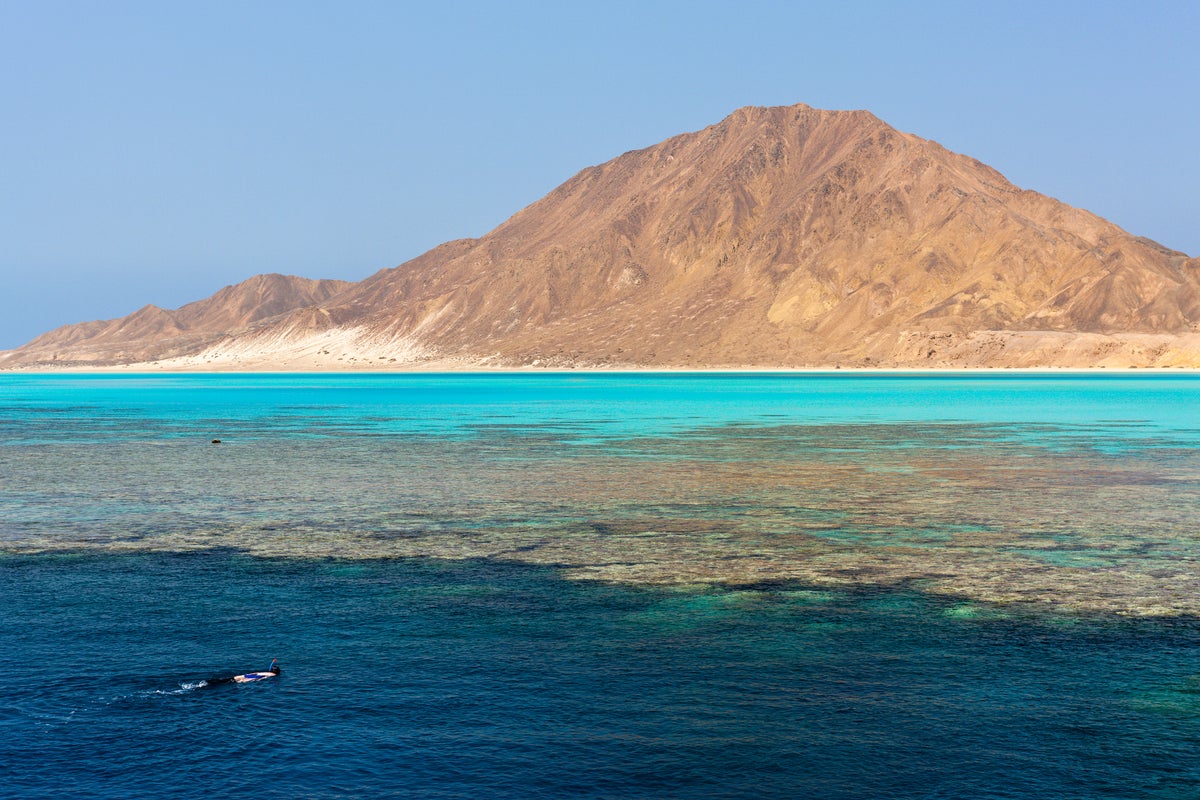
"These scraps of continental crust are found in the middle of oceans, sometimes hundreds of miles from the nearest continent. Scientists have been mystified for decades by how they came to be there; the fragments were even used as an argument against plate tectonics, says Joao Duarte, a geologist at the University of Lisbon in Portugal. But a recent study in Nature Geoscience suggests that these misplaced fragments fit just fine within our understanding of plate tectonics and actually"
"trace back to the chaotic first moments of the breakup of ancient supercontinents. As a continent begins to unzipas is happening now at the Red Seanarrow fault zones can isolate small chunks of continental crust, marooning them on a raft of newly formed oceanic crust. When continents break apart, they form new plate boundaries at what are called mid-ocean spreading centers: magma-gurgling conveyor belts that create new oceanic crust and drive continents apart. The black expanse of thin, dense and relatively young basalt from"
More than a dozen fragments of continental crust occur in the middle of oceans, sometimes hundreds of miles from continents. Continental crust is thicker, more buoyant, and older than thin, dense basaltic oceanic crust. These continental scraps trace back to the chaotic early stages of supercontinent breakup, when unzipping continents and narrow fault zones isolate small continental blocks and maroon them on rafts of newly formed oceanic crust. Mid-ocean spreading centers create oceanic crust while transform faults, where ridges kink and crustal blocks slide past one another, host many of these isolated continental pieces.
Read at www.scientificamerican.com
Unable to calculate read time
Collection
[
|
...
]