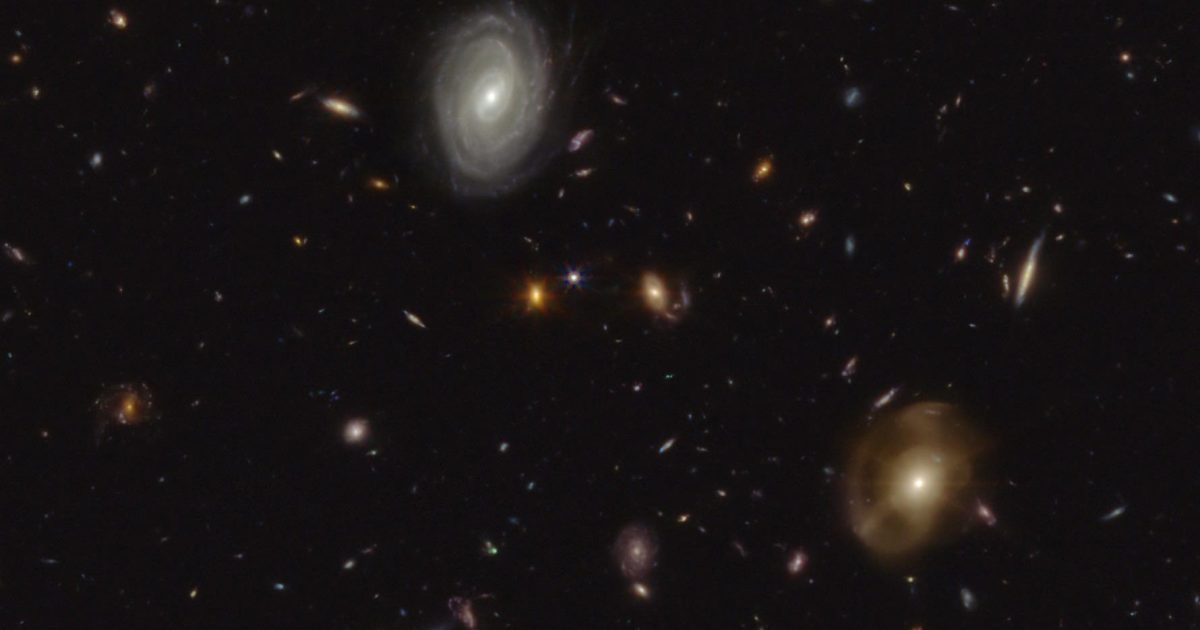
"Since ancient times, humanity has studied the skies. Cometary sightings, eclipses, and "temporary" stars date back thousands of years. Some ~2800 years ago, the Babylonians already predicted eclipses. By the 3rd Century BCE, Eratosthenes measured a spherical Earth's circumference. Shortly thereafter, Aristarchus estimated the Moon's size and distance. But making sense of the Universe took much longer. Planetary motion - in ellipses around the Sun - wasn't known until Kepler's 1609 discovery."
"Our Solar System's 7th and 8th planets weren't known until 1781 and 1846, respectively. The first direct distance determination for a nighttime star wasn't published until 1838. We didn't know cometary debris streams caused meteor showers until 1866. Our modern laws of gravity only arrived in 1915. The first measured galactic distances only arrived in 1923. The expansion of the Universe was only determined from 1927-1929."
Humanity studied the skies from antiquity, recording comets, eclipses, and temporary stars. Around 2800 years ago Babylonians predicted eclipses. By the 3rd Century BCE Eratosthenes measured Earth's circumference and Aristarchus estimated the Moon's size and distance. Kepler showed planetary ellipses in 1609; Halley revealed comet recurrence in 1705. Uranus and Neptune were found in 1781 and 1846. The first stellar distance came in 1838; meteor showers were linked to cometary debris in 1866. Modern gravity arrived in 1915; galactic distances and cosmic expansion were determined in the 1920s. Evidence for dark matter, the Big Bang, dark energy, and inflation emerged in the 20th and early 21st centuries.
Read at Big Think
Unable to calculate read time
Collection
[
|
...
]