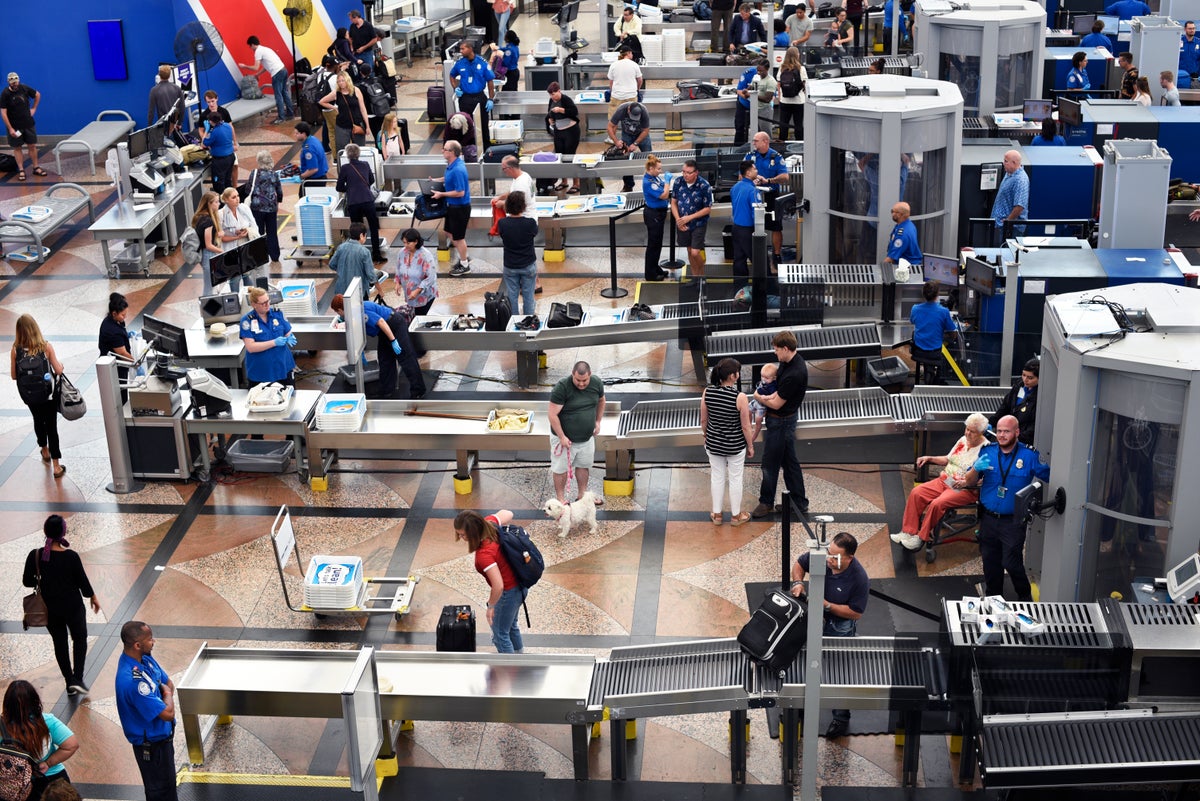
Heathrow implemented a security upgrade permitting travelers to keep electronics in their bags and carry liquids in containers up to two liters, superseding the 100-ml restriction. Improved imaging and software transitioned checkpoints from two-dimensional x-rays to computed tomography (CT) scanners that build three-dimensional models of bags. The 100-ml limit originated in 2006 after a foiled transatlantic liquid explosives plot, when 2D scanners struggled to distinguish harmless liquids from threats amid tangled cables and power bricks. New checkpoint CT systems, including Smiths Detection's HI-SCAN 6040 CTiX, capture many angular images during rotation to enable detailed bag reconstruction.
"The 100-ml (3.4-ounce) maximum for carry-on liquids began in 2006 as a blunt response to a foiled transatlantic liquid explosives plot. At that time, checkpoint scanners were effectively digital shadow puppets. They produced 2D images in which a bottle of shampoo and a dangerous substance could be hard to tell apart, especially when such an object was buried under a tangle of charging cables and power bricks. The solution was a work-around: shrink the liquids to 100 ml until the machines could cope."
"Thank technology: better imaging and software have pushed checkpoints from two-dimensional x-rays to computed tomography (CT) scanners that build a three-dimensional model of your bag. The new class of hardware is checkpoint CT. Heathrow's rollout includes systems such as Smiths Detection's HI-SCAN 6040 CTiX, which captures more than just one or two static angles. The CT scanner rotates an x-ray source around the bag, capturing an image roughly every half-degree. That's about 720 images per rotation."
Read at www.scientificamerican.com
Unable to calculate read time
Collection
[
|
...
]