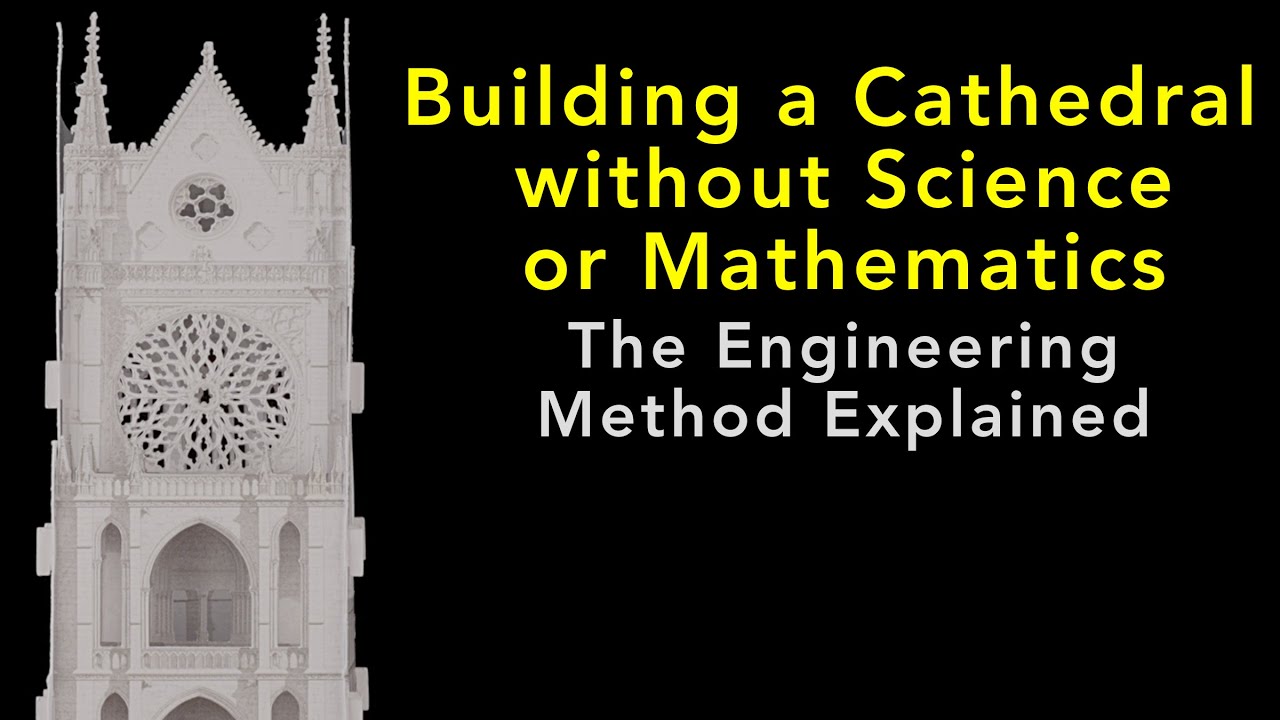
"Compared to today, the scope of knowledge humanity commanded back in medieval times may have been impossibly narrow - to say nothing of the knowledge possessed by any given human, especially outside the literate elite. Yet what was then known proved more than sufficient to build structures that still stand, and indeed impress, many centuries (and in some cases, more than a millennium) later."
"Hammack explains that, in the place of making calculations, their builders would perform actions. For instance, a medieval mason would have made a life-size chalk drawing of the arch, laid a rope along its form, and cut the rope's length to match that of the arch."
Medieval cathedral construction demonstrates that sophisticated engineering achievements do not require modern science or mathematics. Builders of structures like Sainte-Chapelle in Paris employed practical, hands-on methods to design arches and supporting walls. Rather than performing calculations, medieval masons used physical techniques such as creating life-size chalk drawings and using ropes to determine proportions and wall thickness. These empirical approaches proved sufficient to create buildings that have endured for centuries. The distinction between science and engineering becomes apparent when examining how knowledge was applied differently in medieval times compared to today, yet the results remain impressive and structurally sound.
#medieval-engineering #cathedral-construction #practical-knowledge #science-vs-engineering #historical-building-techniques
Read at Open Culture
Unable to calculate read time
Collection
[
|
...
]