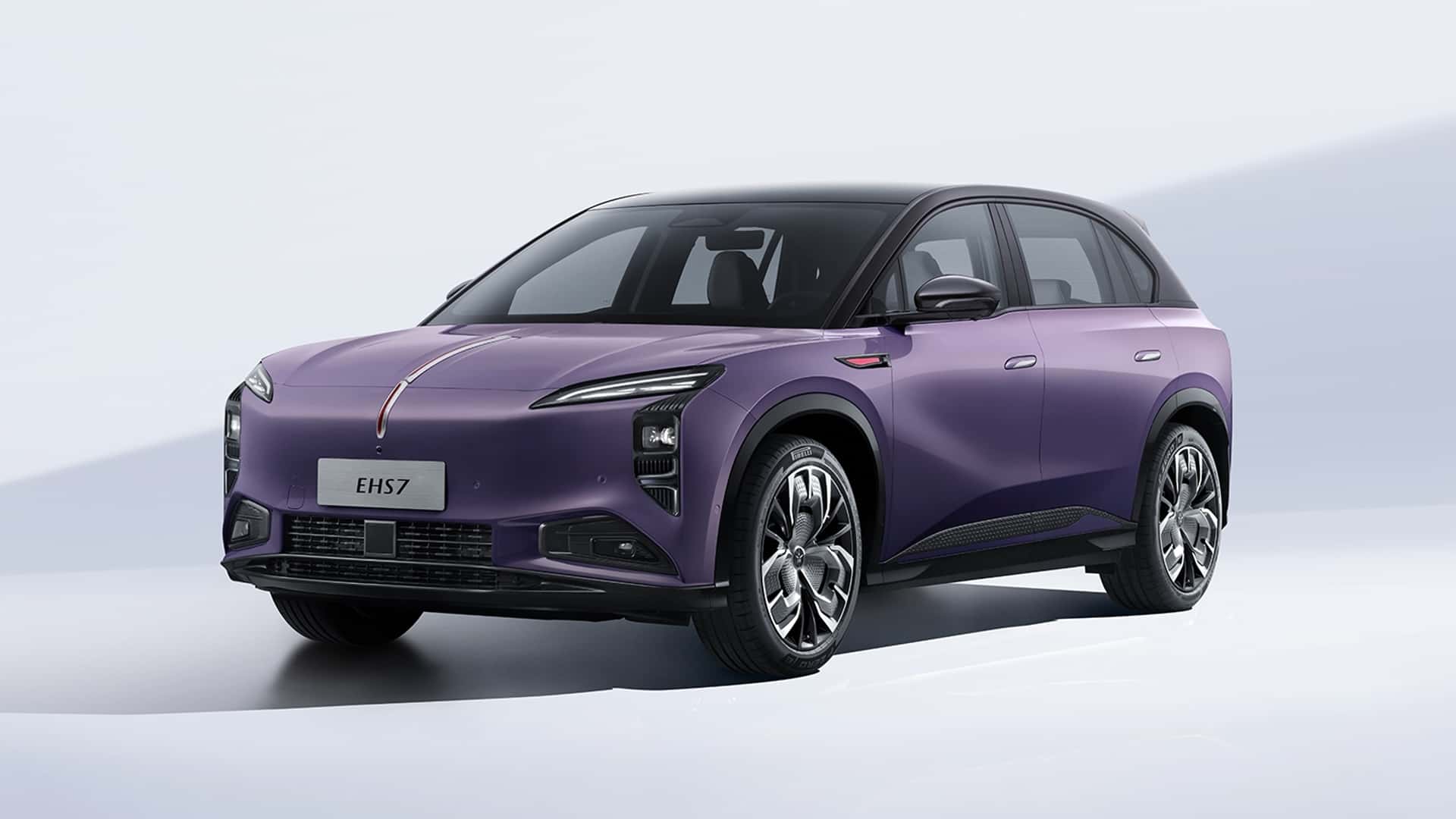
"FAW Group, one of China's largest automakers, with joint ventures with the Volkswagen Group and Toyota, has integrated a new lithium-manganese semi-solid-state battery in a production vehicle, Chinese media outlets have reported. FAW Group showcased a Hongqi-branded electric crossover during the announcement. Its headline figures are impressive. The 142-kilowatt-hour semi-solid-state battery has 500 watt-hours per kilogram of energy density on the cell level, which is double that of today's lithium-ion batteries."
"That results in 1,000 kilometers (620 miles) of manufacturer-estimated range. The real-world range on the more realistic EPA cycle would be much lower. And as always, range is as much about the vehicle as the battery. Aerodynamics, curb weight, powertrain efficiency and driving conditions all play a major role in how far an EV actually goes. What really stands out here is the use of manganese."
FAW Group installed a 142‑kWh lithium‑manganese semi‑solid‑state battery in a production Hongqi electric crossover, claiming 500 Wh/kg cell-level energy density and roughly 1,000 km CLTC range. Real-world EPA-range would be significantly lower, and actual range depends on aerodynamics, curb weight, powertrain efficiency and driving conditions. Semi-solid-state designs use a gel-like electrolyte, but the notable change is a manganese-rich cathode rather than conventional NMC or NCA chemistries. Manganese-rich cathodes are gaining industry traction beyond China, but cost, durability and mass-production timelines remain unclear despite promising energy-density gains.
Read at insideevs.com
Unable to calculate read time
Collection
[
|
...
]