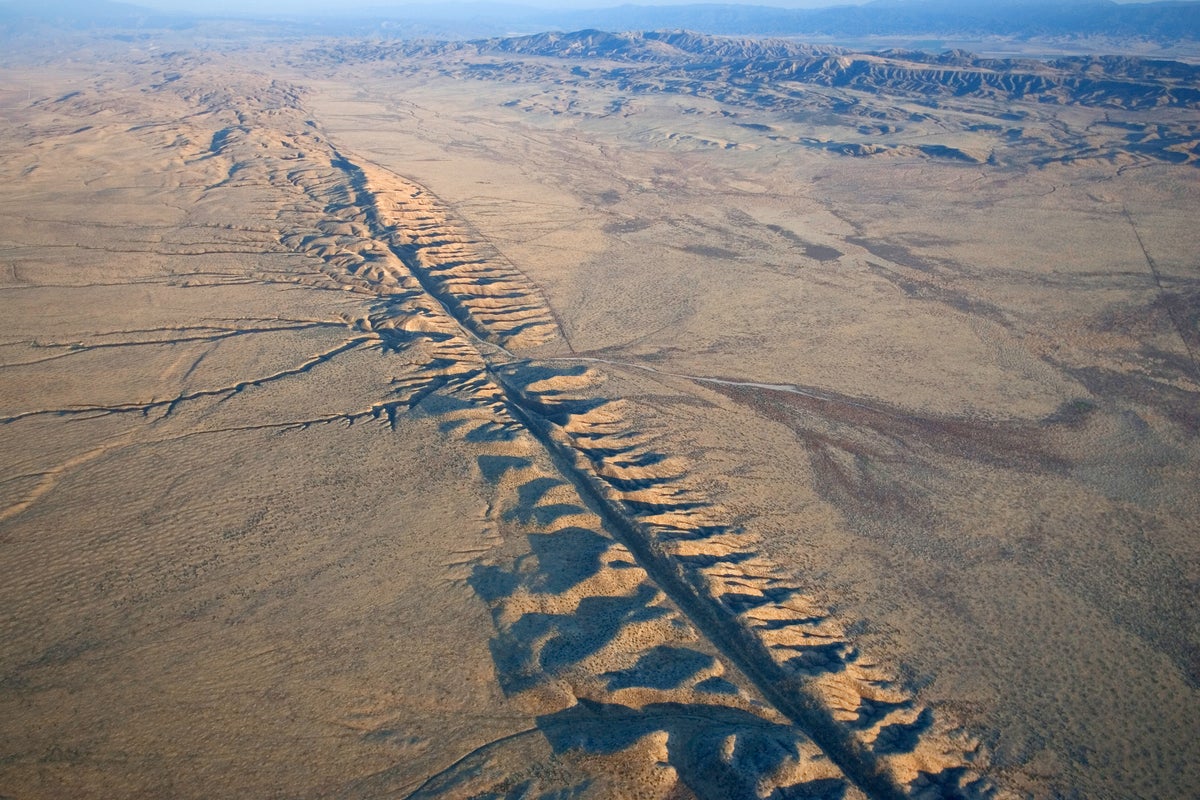
"An earthquake starts deep underground when huge tectonic forces cause stress to build up along a fault line, a massive fracture in Earth's crust where blocks of rock have shifted and moved past each other."
"Once this accumulated stress overcomes the friction holding the rocks together at a specific point called the hypocenter, the fault slips, and a rupture rapidly spreads along it, generating powerful seismic waves that cause the ground to shake."
"When the rupture is going fast and encounters some barrier that suddenly makes it stop, it sends out a shock wave, says study co-author Jesse Kearse, an Earth scientist at Victoria University of Wellington in New Zealand."
"It's like you're in a car and the brakes suddenly engage, and you snap back in your car seat, Kearse explains."
Residents of northeastern Japan experienced a magnitude 7.7 earthquake, with warnings of potential tsunamis and a slim chance of a larger megaquake. A study published in Science examines the evolution of megaquakes, their stopping mechanisms, and prediction methods. Earthquakes begin when tectonic forces create stress along fault lines, leading to a rupture that generates seismic waves. The rupture can stop when it encounters low-stress areas or physical barriers, creating a stopping phase that sends shock waves in the opposite direction.
Read at www.scientificamerican.com
Unable to calculate read time
Collection
[
|
...
]