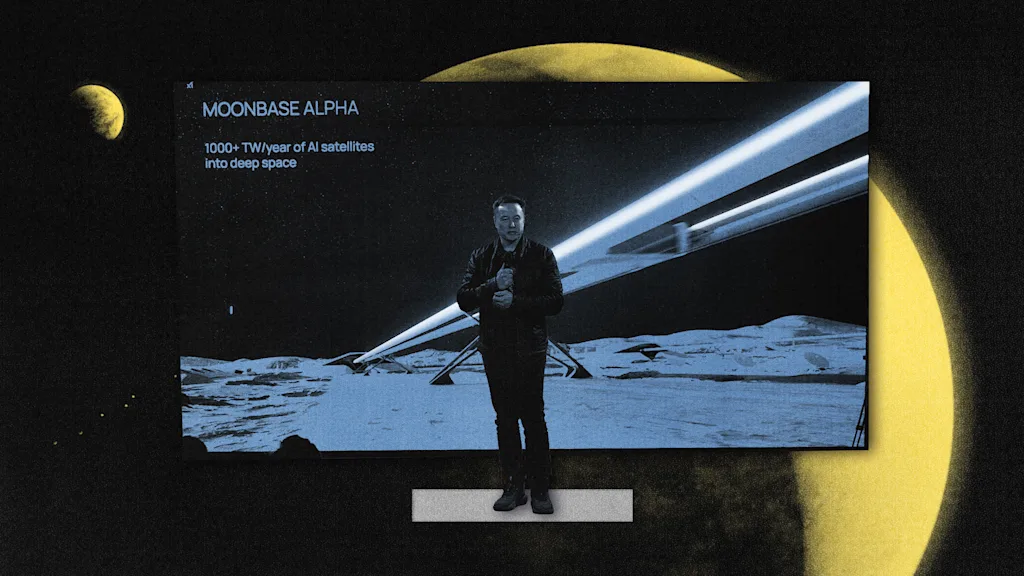
"Launching spacecraft from Earth is extremely expensive. Every pound lifted from Cape Canaveral to low Earth orbit costs thousands of dollars in fuel, hardware, and operational complexity. The farther you want to go in space, the more massive and complex the rocket has to be, increasing costs. Chemical rockets must carry their own oxidizer and propellant, which means most of the vehicle's mass is just fuel to lift more fuel."
"A mass driver could break that stranglehold by using electricity instead of explosives, turning launches into a utility-scale operation rather than a high-wire act. On the Moon, where gravity is one-sixth of Earth's and there's no atmosphere to create drag, this technology could launch payloads at a fraction of the cost-a few dollars per pound in electricity. Compare that to the $1,200 per pound it currently costs to launch a payload on a reusable Falcon 9 rocket."
A lunar mass driver would use electromagnetic acceleration to launch payloads from the Moon, using electricity rather than chemical propellant. The Moon's lower gravity and lack of atmosphere make such launches far more efficient and cheaper, potentially reducing costs to a few dollars per pound versus roughly $1,200 per pound on a reusable Falcon 9. The rocket equation forces chemical rockets to carry propellant to lift propellant, making Earth launches expensive despite reusable technology. Early prototypes were built in 1976 by Gerard O'Neill and Henry Kolm; Mass Drive 1 cost $2,000 and could fire objects at 131 feet per second.
Read at Fast Company
Unable to calculate read time
Collection
[
|
...
]